


The global longevity movement is entering a fascinating new phase. Scientists are no longer looking only at human biology for answers to ageing; increasingly, they are studying animals that evolution has already equipped with extraordinary resistance to cancer, inflammation and age-related deterioration. Among the most intriguing is the naked mole rat, an undeniably unusual-looking underground rodent whose exceptional lifespan has turned it into one of the most valuable natural models in longevity science.

Image Credit: Thailand Wellness News
Researchers at the University of Rochester in the United States have taken that investigation considerably further by transferring a longevity-associated gene from naked mole rats into mice. The genetically modified animals developed greater resistance to cancer, experienced less age-related inflammation and lived modestly longer. At the center of the experiment was a naturally occurring substance called high-molecular-mass hyaluronic acid, abbreviated HMM-HA—a particularly large molecular form of hyaluronic acid that naked mole rats accumulate at exceptionally high levels in their tissues. Importantly, this Thailand Wellness News report examines why HMM-HA is attracting attention not simply as another anti-ageing molecule, but as part of a potentially transferable biological defense system that could eventually influence how scientists approach human health span and longevity.
What Exactly Is HMM-HA?
Hyaluronic acid is a naturally occurring sugar-based molecule found throughout the bodies of humans and other mammals. It is an important component of the extracellular matrix—the structural environment surrounding cells—and is particularly abundant in skin, connective tissues, joints and other organs. It helps tissues retain water and contributes to lubrication, elasticity and tissue integrity.
The term high-molecular-mass hyaluronic acid, or HMM-HA, refers to exceptionally long and therefore very large chains of this molecule. Molecular size matters because different sizes of hyaluronic acid can produce different biological effects.
Naked mole rats possess unusually abundant quantities of extremely large hyaluronic acid molecules. Researchers believe these molecules contribute to maintaining healthy tissue environments, regulating immune activity and protecting cells against stresses that can promote inflammation and cancer.
This is also why the findings should not be confused with the hyaluronic acid commonly promoted in moisturizers, aesthetic injections or dietary supplements. Although they belong to the same broad molecular family, applying hyaluronic acid to the skin or receiving a cosmetic filler is fundamentally different from genetically increasing the production of exceptionally high-molecular-mass hyaluronic acid throughout living tissues.
That distinction will become particularly important if this research begins attracting attention from the commercial longevity and wellness sectors.
Why Naked Mole Rats Fascinate Longevity Researchers
Naked mole rats are roughly comparable in size to mice, yet their lifespans are dramatically different. These subterranean rodents can survive for decades, with maximum lifespans reaching approximately 40 years or more—extraordinary longevity for an animal of their size.
Even more remarkable is the quality of their ageing. Researchers have investigated their unusual resistance to cancer and their apparent protection against several forms of age-associated physiological deterioration. They have consequently become important subjects for scientists trying to understand why some mammals remain healthier for dramatically longer periods than others.
University of Rochester researchers Vera Gorbunova and Andrei Seluanov have spent years investigating these biological characteristics. Their earlier research identified the naked mole rat’s abundance of exceptionally large hyaluronic acid molecules as one possible explanation for its remarkable cancer resistance.
Experiments showed that removing this high-molecular-mass hyaluronic acid from naked mole rat cells made the cells more susceptible to forming tumors.
That discovery led to a much bigger question: could this protective biological mechanism be transferred into another mammal?
Scientists Transfer the Naked Mole Rat Gene into Mice
To investigate, the Rochester researchers engineered mice to carry the naked mole rat version of the Has2 gene, or hyaluronan synthase 2.
The Has2 gene provides instructions involved in producing hyaluronan, another term for hyaluronic acid. The naked mole rat version helps the animal generate exceptionally large hyaluronan molecules and maintain unusually high levels of them within its tissues.
Once the mice carried the naked mole rat gene, researchers observed increased levels of hyaluronan across several tissues.
More importantly, the biological consequences extended well beyond simply producing more of the molecule.
The genetically modified mice developed fewer spontaneous tumors and demonstrated greater resistance to experimentally induced skin cancer. They also experienced lower levels of inflammation in several tissues as they aged, maintained healthier intestinal function and showed increased protection against oxidative stress.
The mice ultimately recorded an approximately 4.4 percent increase in median lifespan compared with ordinary mice.
Why a 4.4 Percent Increase Could Be More Important Than It Sounds
A 4.4 percent lifespan increase is hardly the dramatic life extension imagined by futurists predicting humans routinely living for 150 years.
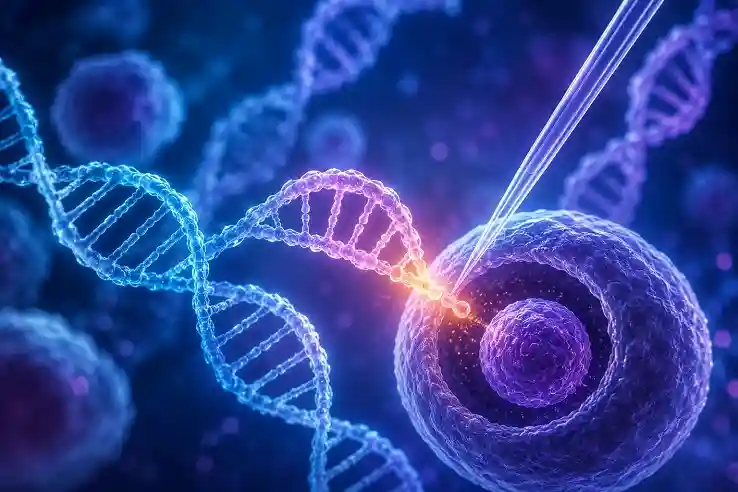
Image Credit: Thailand Wellness News
Yet focusing exclusively on the percentage risks overlooking the scientific importance of the experiment.
The researchers demonstrated that a biological longevity mechanism that evolved naturally in one mammalian species could be transferred into another mammal and still produce measurable health benefits.
Gorbunova described the research as proof of principle that unique longevity mechanisms evolved by long-lived mammals could potentially be exported to improve the lifespan of other mammals.
That concept could ultimately prove more important than the particular lifespan increase achieved in this experiment.
Instead of attempting to discover every longevity intervention from scratch, scientists could increasingly investigate animals that evolution has already equipped with extraordinary protective mechanisms and determine whether those biological strategies can be reproduced elsewhere.
Health Span Could Matter More Than Simply Living Longer
The findings also address one of the central questions confronting modern longevity medicine: What is the value of extending life unless healthy life is extended as well?
The objective increasingly discussed within longevity science is health span—the years during which an individual remains healthy, functional and relatively free from debilitating age-related disease.
This makes the reduction in inflammation observed in the genetically modified mice particularly interesting.
Persistent low-grade inflammation is strongly associated with biological ageing and is sometimes described as “inflammaging.” Over time, chronic inflammatory activity can contribute to tissue damage and is associated with numerous age-related diseases.
Researchers found that high-molecular-mass hyaluronic acid appeared to reduce inflammation through several pathways. These included direct effects on immune cells, protection against oxidative stress and improvements in the intestinal barrier.
The latter is particularly intriguing because deterioration of the gut barrier during ageing can allow inflammatory substances to interact more readily with the immune system.
In other words, the intervention appeared to influence several interconnected aspects of ageing rather than simply extending the animals’ survival.
Could This Eventually Work in Humans?
This is where enthusiasm must remain firmly separated from evidence.
Scientists have not demonstrated that transferring a naked mole rat longevity gene into humans would extend human life, nor does the research establish that increasing hyaluronic acid through currently available wellness treatments produces comparable effects.
The study involved genetically modified mice, and moving from successful animal experiments to safe human therapies is an enormous scientific step.
However, directly transplanting naked mole rat genes into people may not even be necessary.
Researchers are investigating whether the same biological benefits could eventually be achieved by increasing the body’s production of high-molecular-mass hyaluronic acid or slowing the rate at which these exceptionally large molecules are broken down.
Seluanov has previously said that the researchers identified molecules capable of slowing hyaluronan degradation and were investigating them in preclinical studies.
If such an approach eventually proves safe and effective, it could provide a considerably more practical pathway towards exploiting the naked mole rat’s longevity biology.
The Naked Mole Rat Has More Longevity Secrets
The hyaluronic acid story may represent only one component of the animal’s remarkable biological resilience.
Research published in Science in 2025 investigated another potential mechanism involving cGAS, a protein normally associated with immune defence and cellular responses to DNA.
Researchers reported unusual characteristics in the naked mole rat version of cGAS that appear to support more effective DNA repair and genome stability.
This is significant because accumulated DNA damage is one of the fundamental biological problems associated with ageing.
The emerging picture therefore suggests that naked mole rats have not discovered one evolutionary “fountain of youth.” Instead, their longevity may depend upon multiple overlapping protective systems involving cancer suppression, DNA repair, inflammation control, cellular stress resistance and tissue maintenance.
For human longevity research, that may ultimately be the more important lesson.
Nature Could Become the Next Great Longevity Laboratory
The implications stretch beyond naked mole rats. Scientists are increasingly interested in exceptionally long-lived animals—including certain whales, bats and other species—to understand how evolution has solved biological problems associated with ageing.
For the luxury wellness sector, this could eventually produce an entirely new category of interventions.
Today’s sophisticated longevity programmes increasingly combine genomic analysis, advanced biomarkers, continuous metabolic monitoring, medical imaging, precision nutrition and regenerative medicine. Future programmes could potentially incorporate treatments inspired by protective mechanisms first identified in unusually long-lived animals.
But considerable caution is necessary. The Rochester findings do not mean that commercially available hyaluronic acid supplements, skincare preparations or injectable fillers increase lifespan. The molecular size, concentration, location within tissues and biological signaling associated with HMM-HA are crucial to understanding its effects.
Any company attempting to market ordinary hyaluronic acid products as equivalent to the naked mole rat longevity mechanism would therefore be making a considerable scientific leap beyond what this research established.
From an Underground Rodent to the Future of Human Wellness
Perhaps the most exciting aspect of the University of Rochester research is not the possibility that humans might someday receive a naked mole rat gene. Rather, it is the demonstration that evolution may contain a vast library of biological strategies that scientists have only begun to understand. Long-lived species have spent millions of years developing mechanisms for protecting cells, maintaining tissues, suppressing cancer and surviving physiological stress.
The challenge now is to determine which of those mechanisms can be safely translated into human medicine. High-molecular-mass hyaluronic acid offers an intriguing starting point because researchers have already demonstrated that its benefits can cross a species boundary in mammals. Whether that eventually produces medicines capable of extending human health span remains unknown, but the experiment has opened an important scientific door.
If researchers can learn to reproduce nature’s most effective longevity mechanisms without introducing unacceptable risks, tomorrow’s premium wellness medicine could look dramatically different from today’s anti-ageing industry. The ultimate prize would not simply be adding more birthdays, but preserving physical resilience, metabolic health, cognitive function and independence for a greater proportion of the human lifespan.
References:
https://www.nature.com/articles/s41586-023-06463-0
https://www.science.org/doi/10.1126/science.adp5056