


Google is taking another major step into the rapidly expanding digital wellness industry with the launch of its new Fitbit Edge fitness tracker, alongside artificial intelligence-powered health monitoring tools and partnerships that could change how consumers understand their everyday health. The latest developments highlight Google’s ambition to transform wearable technology from simple activity trackers into personalized wellness companions capable of identifying emerging health concerns.
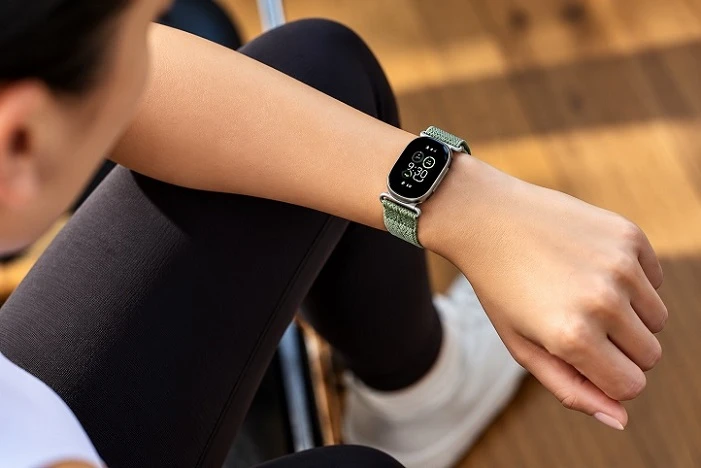
Image Credit: Fitbit
The newly unveiled Fitbit Edge joins Google’s growing wearable lineup, positioned between the minimalist Fitbit Air and the more sophisticated Pixel Watch. As this Wellness News report examines, the launch represents a broader strategy involving advanced sensors, clinical laboratory data, automated workout recognition and personalized health coaching. Rather than merely counting steps or monitoring sleep, Google’s expanding ecosystem aims to connect different health indicators and provide practical guidance before potential problems become more serious.
Fitbit Edge Introduces Advanced Health Monitoring
Priced at $180, the Fitbit Edge combines sophisticated health sensors with an ultra-slim design and battery life lasting up to seven days. The device includes automatic workout detection, an altimeter and monitoring capabilities designed to identify physiological changes associated with blood pressure and insulin resistance.
These capabilities represent an important evolution in consumer wearables. Traditionally, fitness trackers focused primarily on physical activity, heart rate and sleep duration. Google’s newer approach seeks to interpret multiple physiological signals together, helping users recognize patterns that might otherwise remain unnoticed.
However, the technology does not replace conventional medical testing. Its measurements are intended to identify trends rather than provide definitive diagnoses, making professional medical evaluation essential whenever concerning changes emerge.
Health Guardian Uses AI to Detect Warning Signs
Central to Google’s wellness expansion is Health Guardian, an artificial intelligence-supported monitoring system initially introduced for Pixel Watch devices.
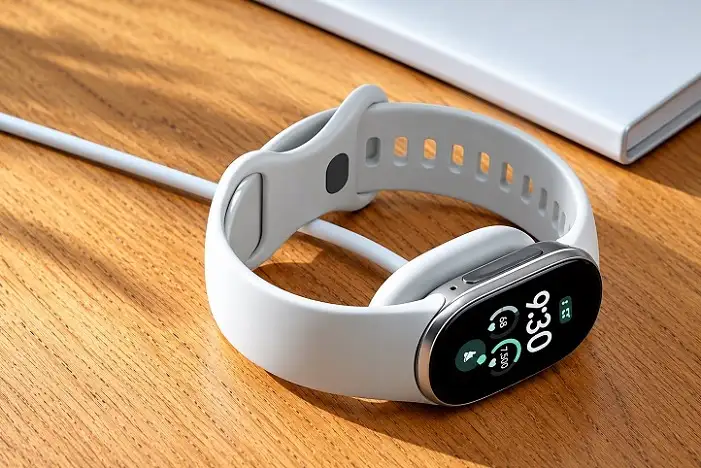
Image Credit: Fitbit
The technology analyzes information collected through wearable sensors to identify subtle changes in metabolic function, blood pressure patterns and sleep breathing quality.
Its insulin resistance monitoring feature examines physiological information collected over several weeks to estimate metabolic energy efficiency without requiring blood samples.
Meanwhile, blood pressure trend analysis uses WavesFM, a foundation model trained on billions of minutes of heart and movement information.
Fitbit Air and Fitbit Edge users subscribing to Google Health Premium will receive monthly summaries highlighting these trends. Google’s Health Coach can subsequently translate the findings into lifestyle recommendations and discussion points for medical consultations.
The objective is earlier awareness, although the accuracy and clinical significance of individual alerts require careful interpretation.
Automatic Workout Detection Gets Major Upgrade
Google is also introducing substantial improvements to automatic activity recognition across Fitbit Air, Fitbit Edge and Pixel Watch models 3, 4 and 5.
The upgraded technology reportedly nearly doubles recognition accuracy while expanding supported workout categories from 10 to more than 100.
Activities involving rapid movement, including tennis and high-intensity interval training, have historically challenged wearable tracking systems.
Google says its updated algorithms combine heart rate information with movement patterns, established routines, location information and user corrections.
Company testing reportedly demonstrated that missed workout detections declined by more than half.
For consumers, improved recognition could produce more complete exercise histories without requiring users to manually activate tracking before every workout.
Function Health Partnership Connects Laboratory Results
Another significant development involves Google’s partnership with Function Health, allowing American users to import clinical laboratory results directly into the Google Health application.
This integration could help consumers examine laboratory findings alongside information about physical activity, sleep and other lifestyle indicators.
Google is also strengthening its partnership network through collaborations with Abbott and MyFitnessPal.
Abbott’s Lingo continuous glucose monitor will allow eligible American users to connect glucose information with meals, exercise and sleep patterns.
Meanwhile, MyFitnessPal integration enables nutrition records to become part of Google’s consolidated health dashboard.
Together, these connections reflect a growing industry movement toward combining medical information and everyday wellness tracking within unified digital platforms.
Women’s Health Becomes Another Strategic Priority
Google has additionally announced a multiyear partnership with women’s health application Flo.
The collaboration aims to incorporate menstrual cycle tracking, pregnancy information and menopause-related guidance into Google Health and its AI coaching capabilities.
Both companies also intend to explore research opportunities involving perimenopause, ovarian metabolic conditions, pregnancy and postpartum recovery.
Such initiatives could help address longstanding gaps in women’s health research while improving access to individualized wellness information.
However, meaningful progress will depend on reliable scientific validation, responsible data handling and ensuring recommendations reflect differences between individual users.
Stylish Accessories Expand Fitbit’s Appeal
Beyond software improvements, Google is introducing a stainless-steel Metal Mesh band for the Fitbit Air.
Available in Champagne Gold and Polished Silver, the accessory costs $70.
A $150 package combining the Champagne Gold band with an Obsidian Fitbit Air will also be offered through selected retail channels.
The accessory reflects Google’s efforts to make wearable health technology appealing as everyday fashion rather than exclusively fitness equipment.
A New Direction for Everyday Wellness
Google’s latest announcements demonstrate how rapidly artificial intelligence, wearable sensors and clinical information are converging. For consumers in Thailand and elsewhere, these developments offer a glimpse of more connected, preventive wellness management. Nevertheless, affordability, privacy protections, medical accuracy and accessibility will ultimately determine whether these innovations deliver meaningful health benefits beyond technological convenience.
For more details, visit:
https://blog.google/products-and-platforms/products/google-health/google-health-updates
https://blog.google/products-and-platforms/devices/fitbit/google-fitbit-edge