


A single blood draw that can search for signals associated with more than 50 types of cancer sounds like the kind of technology that would naturally attract the attention of longevity clinics, executive health programs, and premium wellness centers. That is precisely what is happening with the Galleri test, a multi-cancer early detection, or MCED, blood test developed by GRAIL. Increasingly promoted as an additional layer of proactive health screening, Galleri is designed to look for cancer signals before symptoms develop, including signals associated with cancers for which there are currently no routine population screening programs.

Image Credit: Thailand Wellness News
The attraction is easy to understand. Conventional screening programs focus on a relatively small number of cancers, including breast, cervical, colorectal, lung, and prostate cancer, while many other potentially deadly cancers may remain undetected until symptoms appear. In the middle of growing interest in preventive medicine, this Wellness News report examines why Galleri has become such a prominent offering in the wellness sector, what the test actually measures, and why its impressive technology should still be considered alongside some important clinical limitations.
How Galleri Searches for Cancer in the Blood
Galleri belongs to an emerging class of tests that analyze cell-free DNA, or cfDNA. Cells naturally release tiny fragments of DNA into the bloodstream. Cancer cells can do the same, but their DNA may carry distinctive chemical characteristics.
The test analyzes patterns of DNA methylation, chemical modifications that influence how genes function. Cancer cells can develop abnormal methylation patterns, providing scientists with biological signatures that may distinguish cancer-associated DNA from DNA released by healthy cells.
GRAIL’s technology combines genomic analysis with machine learning to recognize these patterns. When the test identifies a cancer signal, it also attempts to predict where that signal originated in the body. This cancer signal origin prediction is particularly important because Galleri is not itself a diagnostic test. A positive result must be investigated through established diagnostic procedures.
That may mean imaging, endoscopy, biopsy, or other targeted investigations depending on the suspected tissue or organ of origin. The source material reports that the test can predict the likely tissue or organ of origin with approximately 89 percent accuracy.
Why Wellness Clinics Find Galleri So Appealing
Wellness medicine has increasingly moved toward longevity, prevention, personalized testing, and the identification of health risks before they produce obvious symptoms. Galleri fits almost perfectly into that model.
One of its biggest attractions is breadth. Rather than testing separately for individual cancers, Galleri searches for signals associated with more than 50 cancer types from one blood collection. These include difficult-to-screen malignancies such as pancreatic, ovarian, and liver cancers.
Convenience is another factor. For health-conscious consumers accustomed to comprehensive blood panels, advanced imaging, genetic testing, and biological-age assessments, incorporating an MCED blood test into an executive health program can appear to be a logical extension of preventive care.
However, the promise needs careful framing. Galleri is intended to complement established cancer screening, not replace it. People undergoing the test still need provider-recommended mammograms, colonoscopies, cervical screening, lung cancer screening, and other appropriate examinations.
High Specificity Does Not Mean Every Cancer Will Be Found
One of Galleri’s strongest reported characteristics is its specificity. Results from PATHFINDER 2, which evaluated the test alongside standard screening in 35,878 adults aged 50 and older in the United States and Canada who had no clinical suspicion of cancer, reported specificity of 99.6 percent. That corresponds to a false-positive rate of approximately 0.4 percent.
PATHFINDER 2 also found that adding Galleri to standard screening increased cancer detection more than seven-fold, with more than half of the newly detected cancers found at an early stage.
Yet specificity and sensitivity are different measurements, and this distinction matters enormously when consumers evaluate the test.
Galleri does not detect every cancer. Its sensitivity is lower for some early-stage cancers because small tumors may release very little DNA into the bloodstream. The supplied evidence indicates that sensitivity for Stage I cancers can be considerably lower than for advanced disease, varying by cancer type.
This means a “No Cancer Signal Detected” result cannot guarantee that a person is cancer-free. False-negative results are possible, which is another reason conventional screening cannot simply be abandoned after a Galleri test.
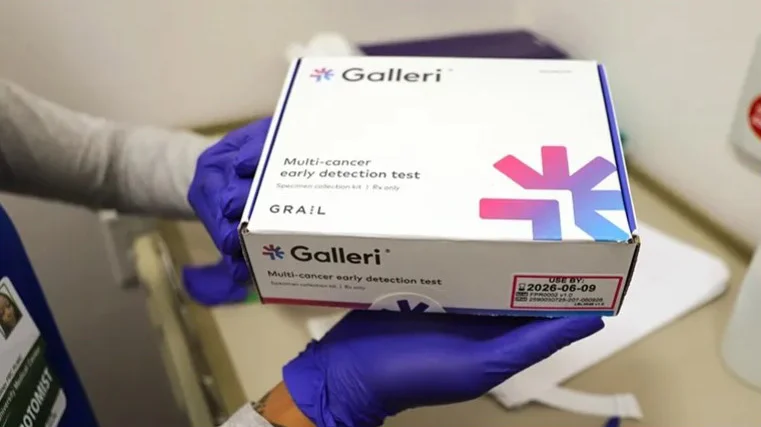
Image Credit: StockShots
What Happened in the Huge NHS-Galleri Trial?
Perhaps the most closely watched evaluation of the technology has been the NHS-Galleri trial in the United Kingdom, involving more than 140,000 participants aged 50 to 77. Participants provided annual blood samples over three years as researchers investigated whether adding Galleri to standard screening could reduce diagnoses of advanced cancer.
The trial did not achieve its primary endpoint of a statistically significant reduction in Stage III and Stage IV cancers combined. That result generated considerable debate because shifting cancer diagnosis away from advanced disease is central to the rationale behind MCED screening.
Secondary findings, however, were more encouraging. The trial showed a reduction of more than 20 percent in Stage IV cancers and an increase in cancers detected at earlier stages. The supplied material also reports that in the third year there was a 26 percent reduction in Stage IV cancers.
The distinction between Stage III and Stage IV disease is clinically significant. Treatment options for a number of Stage III cancers have improved considerably, while Stage IV disease generally remains substantially more difficult to treat. Researchers involved with Galleri therefore argue that moving some diagnoses from Stage IV to Stage III may still have meaningful consequences even though the trial’s combined Stage III/IV primary endpoint was missed.
Importantly, the trial also identified early-stage cases of aggressive cancers, including pancreatic and ovarian cancers, diseases for which effective population-wide screening options have historically been limited.
The Risk of a Diagnostic Odyssey
A cancer signal detected by Galleri does not mean cancer has been definitively diagnosed.
Instead, the result initiates another clinical process. The test identifies one or two likely cancer signal origins, helping a physician determine where to investigate. Imaging, endoscopy, specialist consultation, or biopsy may then be required to establish whether cancer is actually present.
For some patients, that pathway can become lengthy, expensive, and stressful, particularly when initial follow-up investigations fail to locate a tumor. Even a test with a very low false-positive rate can create substantial anxiety for the individual receiving the positive result.
This is an important consideration for wellness clinics marketing Galleri as reassurance or “peace of mind.” The test may provide useful information, but consumers need to understand the possible consequences of both positive and negative findings before testing.
Who Can Take Galleri and What Happens on Testing Day?
Galleri cannot simply be purchased over the counter. It requires an order from a licensed healthcare provider. It is generally positioned for adults at elevated cancer risk, including people aged 50 and older. But many younger adults are also getting the test done these days especially at wellness clinics.
The collection process itself is straightforward. Two tubes of blood are drawn from a vein, and fasting is not required. Patients can generally continue their usual medications. The supplied guidance states that testing should not be performed during active cancer treatment or within 28 days of a blood transfusion.
Samples are analyzed at GRAIL’s specialized laboratory, where cfDNA is extracted and methylation patterns are examined. Results are typically returned to the prescribing healthcare provider within approximately two weeks.
The report essentially provides one of two outcomes: “No Cancer Signal Detected” or “Cancer Signal Detected.” When a signal is found, Galleri also reports the likely cancer signal origin to guide subsequent diagnostic investigation.
Cost and Regulatory Status Remain Important
Accessibility remains another significant issue. The retail price is approximately $950, putting the test beyond the reach of many consumers when it must be paid for out of pocket.
Galleri is available in the United States, Europe and Asia as a laboratory-developed test processed through GRAIL’s CLIA-certified laboratory, but it is not currently approved or cleared by the U.S. Food and Drug Administration or any other regulatory bodies around the world. It is due to this that many hospitals and cancer clinics are not using in but rather the wellness clinics and centers have jumped in and started promoting its use!
GRAIL has submitted a premarket approval application, and the FDA review process will be critical in determining the test’s future place in mainstream cancer screening.
The research program is continuing as well. GRAIL’s clinical development program encompasses multiple trials and hundreds of thousands of participants. The REACH trial is evaluating Galleri in Medicare-eligible adults in the United States and is designed specifically around reducing Stage IV cancer diagnoses.
A Powerful New Tool, but Not a Stand-Alone Cancer Check
Galleri represents one of the most ambitious attempts yet to change cancer screening from a collection of organ-specific examinations into a broader search for multiple cancers simultaneously. Its ability to investigate more than 50 cancer types from a blood sample explains why wellness and longevity clinics see enormous potential in the technology.
But the most responsible interpretation sits between hype and dismissal. Galleri can miss cancers, particularly some early-stage tumors; a positive signal requires diagnostic confirmation; and a negative result must never be treated as permission to skip established screening. The NHS-Galleri trial also demonstrated why large-scale evidence remains essential: promising secondary findings do not erase the fact that its primary endpoint was not met.
For consumers considering the test, the most useful question may therefore be not whether Galleri can replace conventional cancer screening—it cannot—but whether, after consultation with an appropriate healthcare professional, it provides a worthwhile additional layer of screening based on age, risk, medical history, cost, and willingness to undergo follow-up investigations. MCED technology could ultimately reshape preventive medicine, but its greatest value will depend on rigorous evidence, appropriate patient selection, careful interpretation, and integration with screening methods already proven to save lives.
References:
https://www.asco.org/about-asco/press-center/galleri-early-detection-shift-timing-cancer-detection
https://ascopubs.org/doi/10.1200/JCO.2026.44.17_suppl.LBA100
https://www.ucl.ac.uk/news/2026/jun/first-results-nhs-galleri-trial-announced
https://jamanetwork.com/journals/jamanetworkopen/fullarticle/2839885
https://glowwilcowellness.com/cancer-screening
https://encompass-wellness.com/homepage/functional-wellness/early-cancer-screening/
https://www.bmj.com/content/393/bmj-2026-091078
For more on the Galleri Test, visit:
https://www.galleri.com/international-redirect