


A medicinal plant traditionally prepared as an herbal infusion in South America is drawing new attention from scientists studying the biology of aging. Researchers have found that an aqueous extract of Buddleja globosa, commonly known as matico, can modify several cellular responses associated with oxidative stress, inflammation, and senescence, raising intriguing questions about its future place in wellness and longevity research.
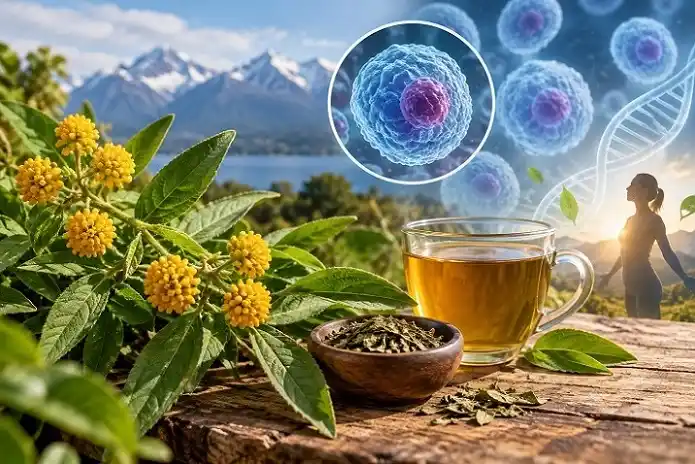
Inage Credit: Thailand Wellness News
The study, published September 12, 2026, in the journal Pharmaceuticals, investigated matico extract in laboratory-grown human THP-1-derived macrophages subjected to hydrogen peroxide-induced oxidative stress. The results covered several biological pathways increasingly studied in antiaging science, and midway through this Wellness News report, one finding deserves particular attention: the effects were strongly dependent on concentration, with higher amounts of the botanical extract not necessarily producing better results.
Why Scientists Are Targeting Aging Immune Cells
Cellular senescence has become an important focus in longevity science. Senescent cells undergo substantial functional changes after exposure to aging-related stresses and can contribute to an inflammatory environment in surrounding tissues.
Macrophages are especially interesting because these immune cells help regulate inflammation and maintain tissue homeostasis. Aging can alter macrophage function, encouraging persistent inflammatory signaling and poorer adaptation to cellular stress. The accumulation of dysfunctional or senescence-associated macrophages may therefore contribute to the chronic low-grade inflammation known as inflammaging, which has been linked to functional deterioration with advancing age.
Oxidative stress is one mechanism capable of triggering these changes. Excess reactive oxygen species can damage cellular structures and influence important pathways involving p16, p21, and NF-κB, making compounds capable of modifying these responses of considerable interest to researchers studying healthy aging.
An Ancient Botanical Meets Modern Longevity Science
Matico has a long history of traditional use in Chile, where its leaves have been consumed as infusions and used in preparations associated with wounds and inflammatory conditions. Previous investigations have identified several classes of potentially bioactive compounds in the plant, including flavonoids, phenylethanoid glycosides, terpenoids, and other phenolic constituents.
Chemical analysis of the aqueous extract used in the new research revealed substantial quantities of several familiar plant compounds. Rutin trihydrate was the most abundant of those quantified at 489.3 milligrams per 100 grams of dried botanical material, followed by quercetin at 171.0 milligrams, caffeic acid at 107.3 milligrams, and procyanidin B2 at 75.2 milligrams.
The preparation also demonstrated antioxidant capacity in laboratory testing, although the researchers stressed that antioxidant performance in a cell-free assay cannot be interpreted as proof that the same antioxidant activity occurs inside cells.
Matico Changed Several Cellular Aging Signals
Researchers exposed macrophages to hydrogen peroxide for one hour and then allowed the cells to recover for five days. The oxidative challenge increased senescence-associated beta-galactosidase positivity and TNFA expression. It also increased levels of the senescence-associated proteins p16 and p21 and phosphorylation of NF-κB, an important inflammatory signaling pathway.
Pretreatment with matico extract produced notable changes.
At concentrations of 1 and 50 micrograms per milliliter, the extract significantly reduced the percentage of senescence-associated beta-galactosidase-positive cells compared with cells receiving hydrogen peroxide alone. The 1-microgram concentration also significantly reduced TNFA expression.
Interestingly, the very low concentration of 0.01 micrograms per milliliter reduced hydrogen peroxide-induced increases in p16, p21, and NF-κB phosphorylation. The 1-microgram concentration reduced p16 and NF-κB phosphorylation, although it did not significantly alter p21 compared with hydrogen peroxide treatment alone.
The Highest Dose Delivered a Surprise
One of the study’s most important findings for the wellness and longevity sector is that matico did not behave like a botanical where simply consuming more might be expected to produce greater benefits.
The highest concentration of 50 micrograms per milliliter reduced some responses when cells were challenged with hydrogen peroxide. However, when administered without oxidative stress, that same concentration increased p16 and p21 abundance and NF-κB phosphorylation. Researchers therefore described the effects as dependent upon concentration, biological endpoint, and cellular context.
This nonlinear behavior is particularly important because only three widely separated concentrations were investigated across the senescence-associated endpoints. The research therefore does not establish an optimal dose or a complete concentration-response relationship.
A Promising Lead Rather Than an Antiaging Treatment
Despite the intriguing results, this remains early-stage laboratory research. THP-1-derived macrophages are a simplified cell model and cannot reproduce the complexity of human aging. Researchers also did not directly measure irreversible cell-cycle arrest, intracellular reactive oxygen species, mitochondrial function, persistent DNA damage, or several other endpoints needed to establish stable cellular senescence.
Crucially, the extract was given before the oxidative challenge. The experiment therefore investigated whether matico could modify the response to subsequent cellular stress rather than whether it could reverse already established senescence. The authors explicitly state that their findings do not demonstrate senomorphic or senotherapeutic activity.
For wellness and longevity science, matico nevertheless presents a fascinating research direction. A water-based botanical preparation resembling the plant’s traditional mode of use influenced several interconnected markers associated with oxidative stress, inflammation, and cellular aging. Yet the unusual concentration-dependent results are equally important, showing why botanical extracts should never automatically be assumed to become more beneficial at higher doses. Better-standardized extracts, deeper phytochemical analysis, mechanistic research, primary human macrophage experiments, pharmacokinetic studies, and ultimately appropriate human trials will be required before matico can credibly move from an intriguing laboratory candidate toward any meaningful antiaging or healthy-longevity application.
Reference:
https://www.mdpi.com/1424-8247/19/9/1447
Medical Disclaimer: All content published by Thailand Medical News is based on scientific research and is intended for informational and educational purposes only. It is not medical advice, diagnosis, or treatment. Readers must not attempt to use, apply, or experiment with any protocols, compounds, or therapies mentioned without first consulting a qualified and licensed medical doctor. Many findings discussed are experimental or preliminary, and only a licensed healthcare professional can determine what is safe and appropriate for an individual’s specific medical condition.