

Ear seeding is emerging as one of the most intriguing wellness trends of the moment, transforming a practice rooted in Traditional Chinese Medicine into a fashionable and highly visible addition to the modern wellbeing landscape. Tiny ear seeds, which can resemble miniature pieces of jewelry when attached to the ear, are increasingly appearing across social media, wellness centers, spas, sporting events and fashion circles as people explore a simple, needle-free approach to auricular acupressure.
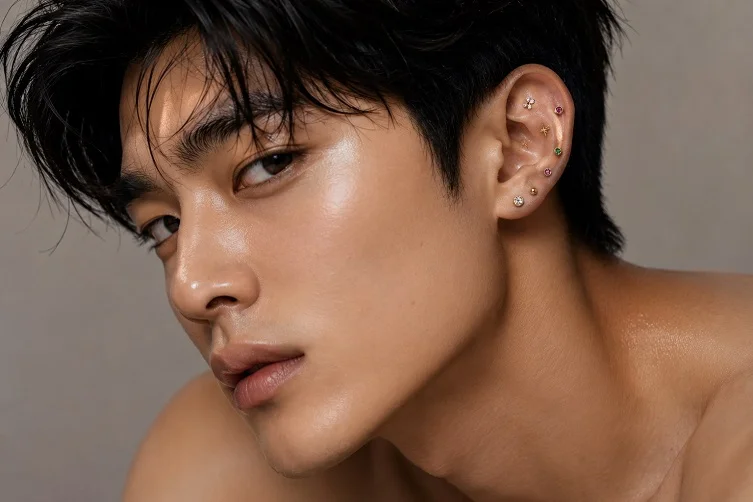
Image Credit: Thailand Wellness News
The concept combines centuries-old traditional practice with the growing demand for accessible wellness techniques that can be incorporated into everyday life. Unlike conventional acupuncture, ear seeding does not require needles to penetrate the skin. Instead, small seeds, beads or pellets are secured to selected points on the outer ear using adhesive and can then be gently pressed to provide stimulation. As this Wellness News report explores, the attraction extends well beyond their increasingly stylish appearance: ear seeds are being investigated and used in connection with relaxation, stress and anxiety, sleep and pain management, while their portability makes them particularly appealing to people looking for wellness practices that can fit easily into busy modern lifestyles.
An Ancient Practice Finds a New Generation
Although ear seeds may look like a distinctly modern wellness innovation, the principles behind them have longstanding roots in Traditional Chinese Medicine.
Ear seeding forms part of auricular acupressure, in which different points on the outer ear are stimulated. Traditional practice regards the ear as containing points corresponding to different regions and functions of the body, creating what is effectively an auricular map.
The concept is often illustrated through the image of an inverted fetus, with different sections of the ear associated with different parts of the body. By stimulating selected auricular points, practitioners seek to support particular therapeutic goals.
Traditionally, the small black seeds of the Vaccaria plant have been used for ear seeding. These tiny natural seeds can be fixed onto specific locations on the ear and pressed periodically by the wearer.
Modern ear seeds have considerably expanded that concept. Products can now incorporate metal beads and other materials, while decorative versions feature gold finishes, crystals and attractive shapes.
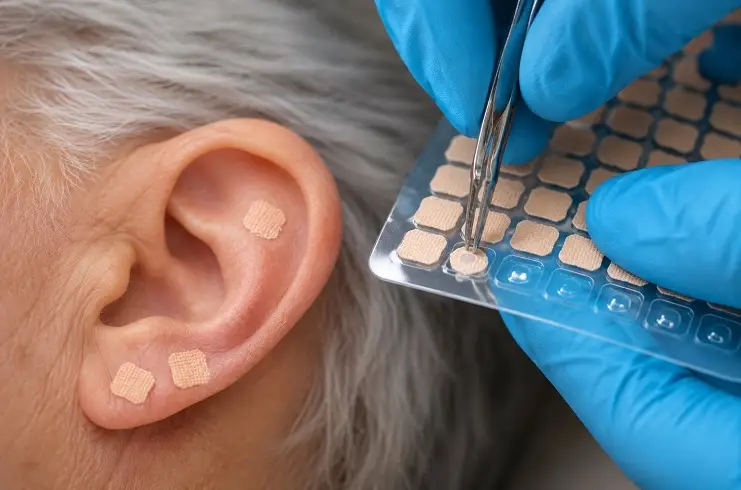
Image Credit: Thailand Wellness News
This transformation has helped introduce auricular acupressure to consumers who may previously have had little familiarity with Traditional Chinese Medicine. Ear seeds can simultaneously represent a wellness practice and a discreet fashion accessory, helping explain why they have become so noticeable online and at high-profile events.
From Wellness Clinics to Wimbledon
The rise of ear seeding has been accelerated by its visibility among celebrities, influencers and leading sports personalities.
One particularly high-profile supporter is tennis superstar Novak Djokovic, an ardent fan who used ear seeding while competing at Wimbledon 2026. The appearance of the tiny seeds on one of international sport’s most recognizable athletes provided the practice with another highly visible moment on the global stage.
Djokovic has developed a reputation for paying close attention to fitness, recovery and wellbeing, incorporating a variety of wellness practices alongside the demanding physical preparation required for elite tennis. The portable nature of ear seeding makes it particularly interesting in the sporting environment because the seeds can remain in position without requiring lengthy treatment sessions.
Interest stretches far beyond sport.
Perhaps you have heard ear seeds mentioned in the same breath as famous names like Lisa, the actress and K-pop star, or Naomi Campbell, the supermodel.
That combination of sport, fashion, celebrity culture and wellness has given ear seeding an unusually broad audience. Social media has accelerated the process further, with videos showing ear-seed placement and users sharing their experiences reaching millions of viewers.
Ear seeds have also been appearing at fashion events, wellness pop-ups and other gatherings, demonstrating how successfully the practice has crossed from the specialist world of acupuncture into mainstream lifestyle culture.
Why Ear Seeds Are Attracting So Much Attention
One of the biggest attractions of ear seeding is its simplicity.
The technique does not involve acupuncture needles, and once the small seeds or pellets have been secured with adhesive, they can remain on the ear while the wearer goes about normal daily activities.
People use ear seeds for a variety of wellness objectives. Auricular acupressure has been explored in relation to pain management, anxiety, stress and sleep, among other areas.
Research into ear seeding remains developing rather than definitive, but a number of studies have produced encouraging findings. Randomized trials involving auricular point acupressure have suggested potential reductions in pain intensity in circumstances including chronic lower-back pain and postoperative recovery.
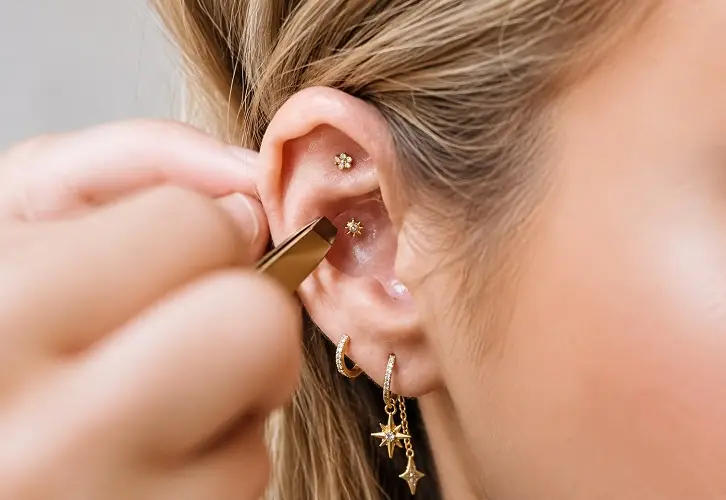
Image Credit: Thailand Wellness News
Small trials have also investigated the stimulation of points on the outer ear in relation to anxiety and the body’s stress response, while reviews examining auriculotherapy and sleep have reported potentially positive outcomes.
Research cited in the supplied material also indicates that some studies involving patients recovering from surgery, including jaw or dental procedures, have found improvements in areas such as pain and anxiety.
The evidence base is still evolving, with differences in study size, design and methodology. Nevertheless, the continuing research interest demonstrates why auricular acupressure remains a noteworthy field within complementary wellness.
From Vaccaria Seeds to Sparkling Wellness Accessories
The dramatic evolution of the physical ear seed itself has played a major part in the practice’s renewed popularity.
Traditional Vaccaria seeds are tiny and understated. Today’s wellness consumer, however, can choose from an expanding range of decorative alternatives.
Some contemporary ear seeds sparkle with crystals, while others resemble tiny gold or metallic studs. There are even heart-shaped varieties. From a distance, they can look remarkably similar to earrings or delicate piercings.
That visual transformation has allowed ear seeds to fit naturally into the expanding market for wearable wellness.
Consumers have become accustomed to seeing wellness products such as pimple patches, LED face masks and other highly visible accessories incorporated into everyday routines. Ear seeds occupy an interesting position within this movement because their appearance can be decorative while retaining their connection to an established traditional wellness practice.
Their popularity has also encouraged spas and wellness businesses to introduce ear-seeding services. Applications are no longer confined exclusively to traditional acupuncture settings and can now be found as wellness or beauty treatment additions in other venues.
The Social Media Fascination with Facial Appearance
Another factor propelling ear seeds into the spotlight has been social media’s fascination with facial appearance.
Numerous videos have promoted ear seeding as part of routines intended to address facial puffiness or produce the sharply defined appearance popularly described online as a “snatched” jawline.
These visually dramatic claims have generated enormous attention because they lend themselves naturally to before-and-after videos.
The scientific research, however, is considerably stronger around areas such as pain and anxiety than it is around cosmetic facial sculpting. Available evidence does not currently establish that ear seeds can permanently sculpt, lift or restructure the face.
This distinction is important because it separates the wider practice of auricular acupressure from individual claims made about it online.
Ear seeding does not depend upon promises of instant facial transformation to be interesting. Its long traditional history, ease of application and developing research into areas such as pain, anxiety and sleep have already created substantial reasons for its growing place within contemporary wellness.
A Simple and Generally Low-Risk Wellness Practice
Another attraction is that ear seeding is generally considered a relatively low-risk practice when carried out appropriately.
Because there are no acupuncture needles penetrating the skin, the process is non-invasive. Small seeds or beads are attached externally and pressure can be applied gently.
Basic care remains important. Excessive repeated pressure can potentially irritate the ear or cartilage, while some people may experience skin sensitivity to the adhesive or materials used. Keeping the area clean and avoiding excessive pressure are sensible precautions.
Professional guidance can also help users identify suitable points rather than simply placing large numbers of seeds across the ear after watching social media videos.
Ear seeds should also be regarded as complementary rather than as replacements for necessary medical care. Persistent symptoms, including unexplained facial swelling or ongoing pain, warrant appropriate medical assessment so that underlying conditions are not overlooked.
Used within those sensible boundaries, ear seeding offers an accessible way for people interested in Traditional Chinese Medicine and complementary wellness to experience auricular acupressure without undergoing conventional acupuncture.
Ear Seeds Bridge Tradition, Wellness and Fashion
The extraordinary resurgence of ear seeding illustrates how successfully an ancient wellness tradition can adapt to a modern audience.
What began with tiny Vaccaria seeds used within Traditional Chinese Medicine has evolved into an international wellness phenomenon encompassing traditional practitioners, spas, social media personalities, celebrities, fashionable crystal accessories and even one of tennis’s biggest stages.
Its appeal is easy to understand. Ear seeds are small, portable, non-invasive and visually distinctive. They can be incorporated into normal daily routines, and contemporary decorative versions allow wearers to make them part of their personal style rather than concealing the fact that they are exploring a wellness practice.
At the same time, scientific interest in auricular acupressure continues. Research has produced promising, although still developing, findings in areas including pain, anxiety and sleep. The evidence base remains preliminary in a number of areas and stronger research will be needed to determine precisely which applications provide the greatest benefits and how significant those benefits may be.
That continuing research may ultimately prove to be one of the most interesting parts of the ear-seeding story. A practice with deep roots in Traditional Chinese Medicine is now encountering modern clinical investigation at the same time that a new generation is discovering it through wellness culture, sport, fashion and social media. Ear seeds have become far more than an obscure traditional treatment: they are now a visible symbol of the increasingly close relationship between ancient wellness traditions and contemporary lifestyles. With their combination of simplicity, portability, decorative appeal and growing international profile, ear seeding and ear seeds look set to remain a fascinating part of the global wellness conversation.
References:
https://www.scielo.br/j/rlae/a/3P9DhfbGCNqTRLXZ7cyqZZJ/?format=html&lang=en
https://onlinelibrary.wiley.com/doi/10.1155/2013/196978
https://link.springer.com/article/10.1186/s12906-015-0606-7
https://onlinelibrary.wiley.com/doi/10.1155/2019/3651268
https://linkinghub.elsevier.com/retrieve/pii/S1524904220301685
https://www.mdpi.com/1660-4601/20/3/1705
https://www.sciencedirect.com/science/article/abs/pii/S1744388118304638
https://www.sciencedirect.com/science/article/abs/pii/S0965229920301655
https://www.sciencedirect.com/science/article/abs/pii/S1744388121001468
Medical Disclaimer: All content published by Thailand Wellness News is based on scientific research and is intended for informational and educational purposes only. It is not medical advice, diagnosis, or treatment. Readers must not attempt to use, apply, or experiment with any protocols, compounds, or therapies mentioned without first consulting a qualified and licensed medical doctor. Many findings discussed are experimental or preliminary, and only a licensed healthcare professional can determine what is safe and appropriate for an individual’s specific medical condition.