

Costa Rica is rapidly emerging as a serious new force in global wellness tourism, presenting fresh competition to established destinations such as Thailand, Bali and Tulum. Famous for tropical rainforests, volcanic landscapes, spectacular coastlines and its relaxed Pura Vida philosophy, the Central American nation is moving beyond its traditional ecotourism image. Increasingly, it is attracting travelers who want wellness to involve nature, sustainability, community and healthier everyday living rather than simply a week inside a luxury retreat.
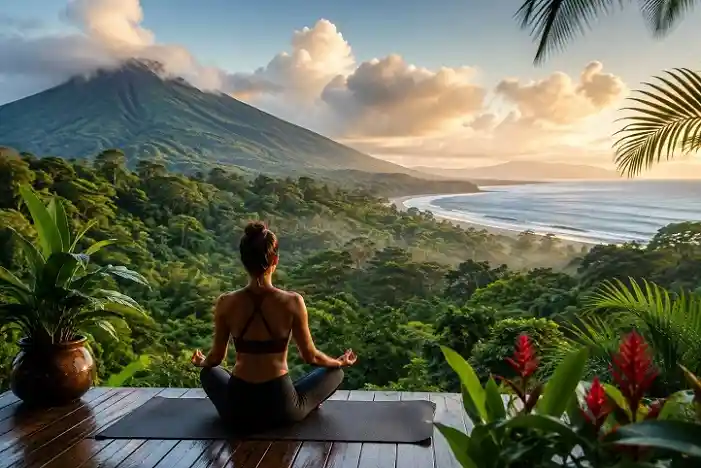
Image Credit: Thailand Wellness News
Thailand and Bali have long commanded international attention through traditional healing, luxury spas, yoga and sophisticated wellness resorts, while Tulum developed a fashionable combination of Caribbean beaches and holistic escapes. Travelers’ priorities, however, are changing. Many now want experiences with benefits that continue after their holidays end. Against this evolving landscape, this Wellness News report looks at why Costa Rica’s combination of biodiversity, longevity, sustainability and high-end hospitality could make it one of the world’s next major wellness destinations.
Wellness Tourism Enters a New Era
Costa Rica’s rise comes as wellness becomes an increasingly powerful part of the international travel industry.
The global wellness economy has grown into a multitrillion-dollar business, with the supplied research valuing it at approximately US$6.8 trillion and wellness tourism itself approaching US$1 trillion. As consumers place greater emphasis on health, mindfulness, nutrition and restorative travel, destinations are competing for a larger share of this lucrative market.
Costa Rica recorded nearly 2.7 million international air arrivals in 2025, according to the supplied information, with tourism momentum reportedly continuing into 2026.
But what visitors do after arriving is becoming equally important.
Alongside conventional beach holidays and adventure tourism, travelers are increasingly exploring yoga, surfing, rainforest immersion, organic farming and thermal wellness. Some remote workers are staying considerably longer, transforming what could have been a short holiday into an opportunity to experience a different lifestyle.
Nature Is Costa Rica’s Greatest Wellness Asset
Costa Rica possesses one advantage that cannot easily be manufactured: an extraordinary natural environment.
Close to 30% of its territory is under some form of protection. Despite accounting for only a tiny fraction of the world’s landmass, the country is also reported to contain close to 6% of known species.
That biodiversity creates an unusually powerful setting for wellness.
Visitors can practice yoga overlooking the Pacific, hike through tropical rainforest and later relax in naturally heated geothermal waters. Instead of nature being an optional excursion attached to a wellness programme, it becomes part of the entire experience.

Image Credit: Tabacón Thermal Resort & Spa
This distinction matters as travelers increasingly seek outdoor activity, stress reduction and meaningful connections with natural environments.
Costa Rica does not have to construct a wellness story around nature. Nature is already its foundation.
Nicoya Adds the Longevity Factor
The Nicoya Peninsula provides another powerful attraction. Internationally associated with the Blue Zones concept, Nicoya has attracted attention for the exceptional longevity traditionally observed among sections of its population.
The lifestyle factors associated with the region are remarkably straightforward. Regular physical movement is integrated into daily routines, family and community relationships remain important, and traditional diets have historically contained substantial plant-based foods.
Another important idea is plan de vida — essentially having a purpose or reason to remain actively engaged with life.
For a global wellness industry sometimes associated with expensive treatments and complicated programmes, Nicoya provides a simpler message: wellbeing may also be shaped by movement, relationships, food, purpose and environment.
That gives Costa Rica a wellness credential that competitors cannot simply reproduce by constructing another luxury resort.
Wellness Moves Beyond Resort Walls
Costa Rica’s rise is not being driven solely by hotels. Places including Nosara, Santa Teresa, Dominical and Uvita have developed communities associated with surfing, yoga, healthy eating, outdoor lifestyles, environmental awareness and remote working.
Farmers’ markets, shared meals, coworking spaces and community activities can become part of the wellness experience.
This represents an important departure from the traditional retreat model, where visitors arrive, follow a programme for several days and then return home.
Costa Rica increasingly offers the possibility of experiencing wellness as part of ordinary life. For travelers interested in community and lasting lifestyle changes rather than temporary relaxation alone, that proposition could become particularly attractive.
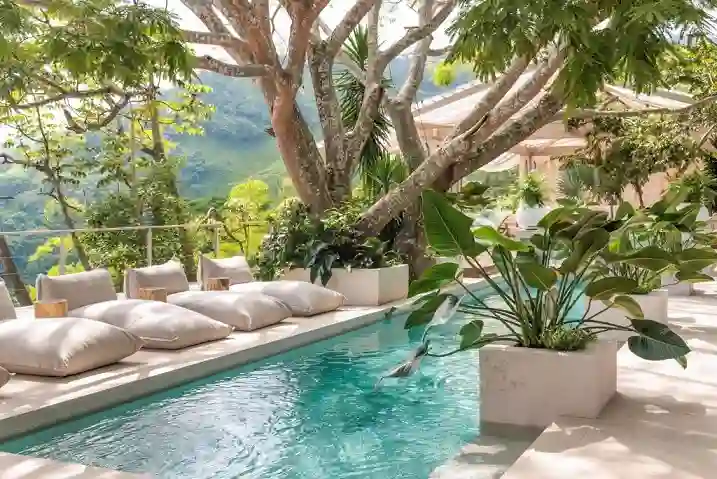
Image Credit: The Retreat Costa Rica
Luxury Resorts Strengthen Costa Rica’s Appeal
Costa Rica is also developing a sophisticated luxury wellness sector.
The Retreat Costa Rica in the Central Valley combines spa experiences, yoga and organic farm-to-table cuisine. In the Arenal region, Tabacón Thermal Resort & Spa uses the country’s volcanic environment to offer naturally heated mineral waters surrounded by tropical vegetation.
Nayara Springs similarly combines rainforest privacy with geothermal experiences, while Hacienda AltaGracia, part of Auberge Resorts Collection, offers holistic wellness through The Well within a dramatic mountain setting.
On the Nicoya Peninsula, Hotel Nantipa takes a coastal approach through yoga, surfing and holistic body treatments.
Together, these properties demonstrate Costa Rica’s ability to combine sophisticated hospitality with the natural landscapes increasingly sought by wellness travelers.
Sustainability Becomes a Competitive Advantage
Sustainability could prove to be one of Costa Rica’s strongest weapons.
According to the supplied information, more than 98% of the country’s electricity in a typical year comes from renewable sources, including hydropower, wind, geothermal and solar energy. Costa Rica has also invested extensively in conservation and reforestation.
That matters because travelers are increasingly connecting environmental wellbeing with personal wellbeing.
A destination promoting healthy living and reconnection with nature faces an obvious contradiction if tourism simultaneously damages the landscapes visitors have travelled to enjoy.
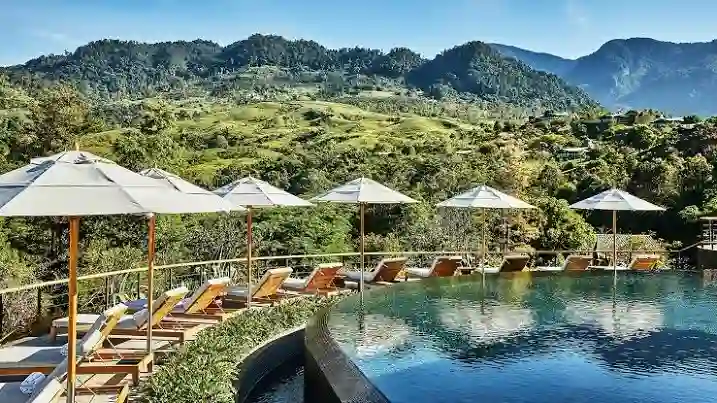
Image Credit: Hacienda AltaGracia
Costa Rica has an opportunity to offer a more convincing proposition. Its forests, biodiversity and protected areas are not simply tourism marketing tools; conservation has become an important part of the country’s international identity.
A Threat to Thailand, Bali and Tulum?
Thailand, Bali and Tulum are unlikely to surrender their wellness status easily.
Thailand remains a global powerhouse, combining traditional Thai massage, healing practices, renowned hospitality, medical tourism and world-class wellness resorts.
Bali possesses deeply established spiritual traditions, yoga communities and enormous international recognition, while Tulum has created a powerful lifestyle brand around its Caribbean coastline and holistic hospitality scene.
Costa Rica’s advantage is that it does not need to copy them.
Its strongest selling points are biodiversity, ecological immersion, outdoor living, longevity, sustainability and community.
Accessibility provides another advantage, particularly for North American travelers. Costa Rica can be considerably easier to reach than Southeast Asia, making shorter holidays and repeat wellness visits more practical.
As wellness becomes a regular lifestyle priority rather than an occasional indulgence, convenience could become increasingly influential.
A Different Kind of Luxury
The definition of luxury is changing as well. Lavish suites, elaborate spas and exceptional service remain important, but many travelers increasingly regard silence, clean air, fresh food, uncrowded nature, privacy and time as luxuries in their own right.
Costa Rica is naturally equipped to provide them. Central to its appeal is Pura Vida, literally meaning “pure life” but carrying a broader cultural association with appreciation, simplicity and a more relaxed approach to everyday living. Competitors can build new spas and introduce fashionable treatments. Reproducing an entire environmental and cultural setting is considerably harder.
The Wellness Race Is Changing
Costa Rica is unlikely to replace Thailand, Bali or Tulum outright. Each has distinctive traditions, landscapes and hospitality strengths developed over decades. What Costa Rica represents instead is a shift in what wellness travelers increasingly value.
Purpose is beginning to compete with pampering, community with exclusivity and environmental responsibility with conventional luxury. Costa Rica brings these trends together through rainforests, biodiversity, volcanic landscapes, geothermal waters, Pacific beaches, longevity culture and an expanding luxury wellness industry.
For Thailand, Bali and Tulum, Costa Rica’s emergence should therefore be viewed as a sign that the global wellness landscape is becoming more competitive. Tomorrow’s wellness traveler may expect considerably more than impressive spas and carefully packaged retreats.
Costa Rica’s greatest strength could ultimately be its refusal to become another Thailand, Bali or Tulum. By presenting wellness as something embedded in nature, sustainability, community and daily life, the country is creating an identity of its own. If travelers continue prioritizing authenticity, purpose and environmental connection, Costa Rica could become one of the defining wellness destinations of the coming years — and a competitor the established wellness capitals cannot afford to ignore.
The top five wellness resorts or spas in Costa Rica:
Tabacón Thermal Resort & Spa in Arenal
The Retreat Costa Rica in Atenas
https://www.theretreatcostarica.com
Hacienda AltaGracia in the southern mountains
https://auberge.com/altagracia
Nayara Springs / Tented Camp in Arenal
Hotel Nantipa in Santa Teresa