


Wellness and Longevity News: A naturally occurring compound extracted from the humble jujube fruit has captured the attention of longevity researchers after a newly published study reported that it significantly extended lifespan, enhanced resilience against stress, and reduced key features associated with Alzheimer’s disease in laboratory models. While the findings remain firmly within the realm of preclinical research, they provide compelling evidence that one of nature’s oldest medicinal fruits may still hold untapped secrets for healthy aging and brain health.
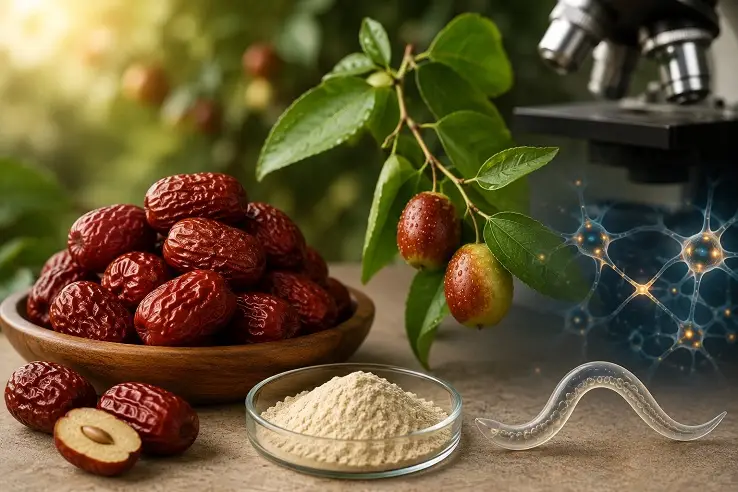
Image Credit: Thailand Wellness News
Scientists from several Chinese research institutions focused on zizybeoside II (ZB), a bioactive compound isolated from Jujube Fructus (Ziziphus jujuba), a fruit that has been valued in traditional Chinese medicine and nutrition for thousands of years. Midway through their investigation, this Wellness and Longevity News report notes that the researchers explored whether this naturally derived molecule could influence not only lifespan but also biological processes linked to neurodegeneration. Their findings suggest that ZB may simultaneously target multiple hallmarks of aging while slowing the progression of Alzheimer’s-related pathology in experimental models.
Ancient Superfruit Meets Modern Longevity Science
Jujube has long been recognized throughout Asia as both a nourishing food and a medicinal botanical. Modern scientific studies have already associated the fruit with antioxidant activity, immune support, anti-inflammatory effects and neuroprotection. However, researchers have struggled to identify precisely which compounds inside the fruit are responsible for these health-promoting properties.
In the new study, researchers isolated two major compounds from jujube extracts using high-performance liquid chromatography. After comparing both molecules, zizybeoside II emerged as the standout candidate, displaying significantly greater ability to extend lifespan than zizybeoside I in laboratory testing.
Longer Life Without Sacrificing Vitality
The research team used the tiny nematode Caenorhabditis elegans, one of the world’s most widely accepted experimental models for aging research because many of its cellular pathways closely resemble those found in humans.
When the worms received zizybeoside II, they lived significantly longer than untreated animals. More importantly, the researchers found that longevity was not achieved at the expense of normal biological function.
The treated worms maintained reproductive capacity, preserved normal growth, demonstrated improved movement as they aged, and became more resistant to oxidative stress, heat stress and ultraviolet stress. Such findings are particularly significant because many experimental lifespan-extending compounds reduce fertility or impair normal development, neither of which appeared to occur with zizybeoside II.
Stronger Defenses Against the Stresses of Aging
As organisms grow older, their ability to withstand environmental and metabolic stress typically declines. The investigators therefore challenged treated worms with several forms of stress that normally accelerate biological deterioration.
The results were striking. Worms receiving zizybeoside II survived longer when exposed to oxidative damage, elevated temperatures and ultraviolet radiation compared with untreated controls.
The scientists believe these improvements reflect enhanced cellular stress response systems rather than simply slowing metabolism, an important distinction because maintaining resilience is increasingly viewed as one of the central pillars of healthy longevity.
Encouraging Results Against Alzheimer’s Disease
Perhaps the most intriguing aspect of the research involved experimental models of Alzheimer’s disease.
The investigators employed genetically engineered C. elegans that produce toxic beta-amyloid proteins similar to those implicated in human Alzheimer’s disease. These worms normally develop progressive paralysis and behavioral impairments as the toxic proteins accumulate.
Treatment with zizybeoside II delayed paralysis, improved movement, enhanced food-seeking behavior and extended overall lifespan. The researchers also observed improvements in neurological function that suggested the compound was reducing the damaging effects of amyloid toxicity rather than simply masking symptoms.
Targeting the Biology Behind Protein Damage
The study moved beyond behavioral observations to examine the biological mechanisms responsible for the improvements.
Researchers discovered that zizybeoside II activated the HSF-1/HSP-16.2 pathway, an important cellular defense system responsible for maintaining protein quality and protecting cells from stress.
Activation of this pathway increased production of protective heat-shock proteins that help cells properly fold proteins and remove damaged or misfolded proteins before they accumulate.
When the scientists genetically disabled this pathway, the lifespan-extending benefits of zizybeoside II largely disappeared, strongly suggesting that the protective mechanism depends upon this molecular signaling network.
Human Cell Studies Add Another Layer of Evidence
To strengthen their findings, the researchers also investigated cultured mouse nerve cells engineered to model Alzheimer’s disease.
In these cells, zizybeoside II reduced accumulation of two of Alzheimer’s most recognizable pathological markers—beta-amyloid (Aβ) and phosphorylated tau (p-Tau) proteins.
At the same time, the compound lowered reactive oxygen species, reducing oxidative stress while increasing activity of superoxide dismutase, one of the body’s key antioxidant enzymes.
When researchers blocked the HSF-1/HSP-16.2 signaling pathway, many of these protective effects disappeared, further reinforcing the proposed biological mechanism.
Why These Findings Matter
The global burden of Alzheimer’s disease continues to rise rapidly as populations age, making the search for therapies that target aging itself increasingly important.
Rather than focusing on a single disease process, longevity researchers are increasingly seeking interventions capable of improving multiple biological systems simultaneously. Zizybeoside II appears to fit this emerging strategy by influencing stress resistance, protein maintenance, antioxidant defenses and neurological function within the same experimental framework.
The work also highlights the continuing scientific value of traditional medicinal plants. Natural compounds that have been consumed safely for centuries frequently provide valuable starting points for the development of future pharmaceuticals or evidence-based nutraceuticals.
A Promising Beginning Rather Than a Finished Story
Despite the excitement surrounding these findings, the researchers emphasize that the work remains at an early stage. The lifespan extension and Alzheimer’s improvements were demonstrated in worms and laboratory cell models rather than in human clinical trials.
Whether zizybeoside II produces similar effects in people remains unknown, and substantial research—including animal studies and carefully designed clinical trials—will be required before any therapeutic recommendations can be made.
Nevertheless, the evidence positions zizybeoside II as one of the more intriguing naturally derived longevity candidates currently emerging from nutritional science. By simultaneously improving resilience, reducing toxic protein accumulation and activating fundamental cellular protection pathways, the compound offers researchers an encouraging new direction in the pursuit of healthier aging and protection against neurodegenerative disease. While consumers should not interpret these findings as proof that eating jujube fruit can prevent Alzheimer’s disease or extend lifespan, the study provides a scientifically credible foundation for future research that could ultimately reshape how natural compounds contribute to next-generation longevity medicine.
Reference:
https://onlinelibrary.wiley.com/doi/10.1002/fsn3.72151
For the latest Wellness and Longevity News, keep on logging to Thailand Wellness News.