


The search for a longer, healthier life is moving beyond familiar antioxidants toward a fascinating group of naturally occurring compounds that may influence how human cells repair themselves, manage inflammation, produce energy, and respond to age-related damage. While resveratrol from grapes, curcumin from turmeric, and green tea catechins have dominated wellness discussions for years, scientists are increasingly investigating less familiar phytochemicals with distinctive biological properties. Five compounds attracting particular interest are 4,4′-dimethoxychalcone, astaxanthin, pterostilbene, withaferin A, and oleocanthal. Found in sources ranging from Japanese herbs and microalgae to blueberries, ashwagandha, and extra-virgin olive oil, these substances offer intriguing possibilities for supporting cellular health and maintaining vitality throughout aging.
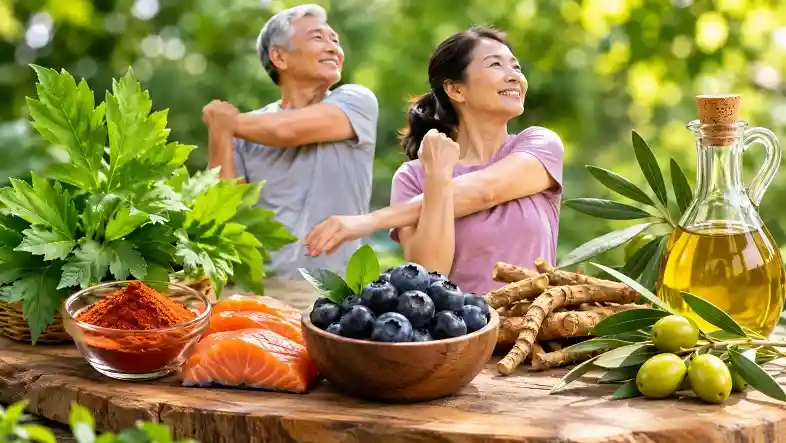
Image Credit: Thailand Wellness News
What makes these compounds especially interesting is that their potential benefits extend beyond conventional antioxidant activity. Rather than merely neutralizing unstable molecules, they interact with biological pathways involved in cellular recycling, mitochondrial protection, metabolic regulation, protein maintenance, and inflammatory signaling. As this Thailand Wellness News report explores, researchers are examining whether these mechanisms could eventually translate into practical strategies for healthier aging. Although laboratory findings are encouraging, the strength of human evidence varies considerably among the five compounds, and none has been conclusively demonstrated to extend human lifespan. Nevertheless, understanding their biological actions provides valuable insight into the expanding relationship between nutrition, cellular resilience, and long-term wellness.
Why Phytochemicals Matter in the Biology of Aging
Plants manufacture thousands of specialized chemical compounds to protect themselves against environmental challenges. Intense sunlight, drought, temperature fluctuations, insects, and microbial infections all threaten plant survival, prompting the production of protective substances collectively known as phytochemicals.
When humans consume plant-derived foods, certain phytochemicals interact with cellular signaling systems. Some influence enzymes responsible for managing oxidative stress, while others affect inflammatory responses, metabolic regulation, and the removal of damaged cellular components.
One concept receiving attention is xenohormesis, which proposes that organisms may respond beneficially to chemical signals produced by plants experiencing environmental stress. Although the concept remains an evolving scientific hypothesis, it offers a possible explanation for some biological effects observed with plant-derived compounds.
Aging itself involves numerous interconnected processes, including mitochondrial dysfunction, impaired protein maintenance, chronic inflammation, and declining cellular repair capacity. Consequently, researchers increasingly recognize that supporting healthy aging requires attention to multiple biological systems rather than focusing exclusively on antioxidants.
The following five phytochemicals illustrate how different natural compounds may interact with these processes.
1. 4,4′-Dimethoxychalcone: Supporting the Cellular Recycling System
One of the more unusual compounds investigated in longevity research comes from ashitaba, scientifically known as Angelica keiskei.
This leafy Japanese herb grows particularly well around the country’s Pacific coastal regions, including Hachijo Island. Its Japanese name translates approximately to “tomorrow’s leaf,” reflecting the plant’s reputation for rapid regrowth after harvesting.
Ashitaba has traditionally been consumed as a vegetable, herbal tea, and ingredient in various preparations. However, its growing scientific reputation comes from a compound found in its characteristic yellow sap: 4,4′-dimethoxychalcone, commonly abbreviated DMC.
How DMC Influences Autophagy
Autophagy is one of the body’s essential cellular maintenance processes. Through this mechanism, cells identify damaged proteins, dysfunctional organelles, and other unwanted materials before breaking them down and recycling their components.
Efficient autophagy helps maintain cellular function. When this process becomes impaired, damaged structures may accumulate, contributing to conditions associated with aging.
Researchers studying DMC discovered that it could stimulate autophagy and extend lifespan in several laboratory organisms, including yeast, worms, and fruit flies.
Particularly interesting was its apparent ability to promote autophagy through mechanisms that differ from conventional pathways involving mTOR, a major regulator of cellular growth and nutrient sensing.
Experimental findings implicated GATA transcription factors and changes in intracellular metabolic signaling.
Researchers also observed protective effects in experimental models involving cardiac injury associated with restricted blood flow.
These findings suggest that DMC may influence fundamental mechanisms of cellular maintenance.
However, results from laboratory organisms cannot establish that consuming ashitaba or purified DMC will extend human life. Human clinical evidence remains insufficient, and appropriate therapeutic doses have not been established.
Ashitaba in Everyday Nutrition
Ashitaba leaves can be prepared as vegetables or incorporated into teas and food products.
Nevertheless, the concentration of DMC varies between plant tissues and preparations, meaning ordinary consumption cannot be assumed to reproduce experimental effects obtained using isolated compounds.
Individuals considering concentrated ashitaba extracts should also recognize that herbal products may interact with medications or introduce additional safety concerns.
For now, DMC represents an interesting research candidate rather than a clinically validated longevity intervention.
2. Astaxanthin: Protecting Cellular Membranes and Mitochondria
Astaxanthin is responsible for some of nature’s most recognizable reddish-pink colors.
It contributes to the pigmentation of salmon, shrimp, krill, and several other aquatic organisms. One important natural producer is Haematococcus pluvialis, a freshwater microalga that accumulates astaxanthin when exposed to environmental stress.
The pigment helps protect the organism against oxidative damage and intense light exposure.
Scientists have become interested in whether similar protective properties might benefit human tissues.
A Distinctive Molecular Structure
Astaxanthin belongs to the xanthophyll family of carotenoids. Its molecular structure contains polar groups at opposite ends of a long, predominantly nonpolar chain. This arrangement allows it to associate with lipid membranes in ways that differ from many other antioxidants.
Experimental research suggests astaxanthin can help protect membrane lipids against oxidation, potentially preserving the integrity of cellular structures.
This is particularly relevant to mitochondria, the organelles responsible for producing much of the energy required by human cells.
Mitochondria continuously generate reactive oxygen species during normal metabolism. Although these molecules participate in essential signaling, excessive oxidative stress can damage mitochondrial membranes and interfere with cellular function.
Astaxanthin has demonstrated antioxidant and membrane-protective activity in experimental models, making it a subject of interest in mitochondrial health research.
Potential Benefits for Skin and Physical Performance
Among the five compounds discussed here, astaxanthin has a relatively substantial body of human supplementation research.
Several small clinical studies have investigated its effects on skin hydration, elasticity, wrinkles, and responses to ultraviolet exposure.
Some findings suggest improvements in selected skin parameters, although differences in study design, dosage, and participant characteristics limit definitive conclusions.
Researchers have also examined astaxanthin for exercise recovery, fatigue, and oxidative stress associated with physical activity.
Results have been mixed, with certain studies reporting improvements in selected outcomes while others have found limited benefits.
Astaxanthin has additionally attracted interest in eye health and neurological protection, partly because experimental evidence suggests it can reach tissues protected by specialized biological barriers.
However, clinical evidence remains insufficient to establish that supplementation prevents neurodegenerative diseases or age-related vision loss.
Food Sources and Absorption
Salmon and certain seafood provide dietary astaxanthin, while commercially available supplements frequently use microalgae-derived preparations.
Because astaxanthin is fat-soluble, consuming it with a meal containing dietary fat may improve absorption.
Importantly, its potential antioxidant effects should not be confused with proven human lifespan extension. Current evidence supports continued investigation into specific wellness outcomes rather than broad anti-aging claims.
3. Pterostilbene: A Blueberry Compound with Metabolic Potential
Pterostilbene is a naturally occurring polyphenol closely related to resveratrol, the much-discussed compound found in grapes and red wine.
It occurs in blueberries and several other botanical sources, including the heartwood of Pterocarpus marsupium, a tree traditionally used in Ayurvedic preparations.
Although chemically similar to resveratrol, pterostilbene possesses structural differences that influence its absorption and metabolism.
These characteristics have made it an attractive candidate for research into metabolic health and age-associated cellular changes.
Why Its Molecular Structure Matters
Resveratrol contains three hydroxyl groups, whereas pterostilbene has two methoxy groups replacing two of those hydroxyl groups.
This modification increases pterostilbene’s lipid solubility and changes how it is processed by biological systems.
Experimental pharmacokinetic research suggests pterostilbene may achieve greater oral bioavailability than resveratrol under certain conditions.
However, frequently quoted numerical comparisons between the two compounds come largely from preclinical research and should not be interpreted as established human absorption rates.
Greater bioavailability also does not automatically mean greater clinical effectiveness.
A compound must demonstrate meaningful benefits in well-designed human studies before its theoretical pharmacological advantages can be considered medically important.
Investigating Sirtuins and Metabolic Signaling
Researchers have investigated pterostilbene’s influence on cellular pathways involving SIRT1 and AMPK.
SIRT1 belongs to the sirtuin family of proteins, which participate in metabolic regulation and cellular stress responses.
AMPK functions as an important energy sensor, helping cells adjust metabolism according to available energy.
Laboratory findings suggest pterostilbene may influence these pathways and affect processes associated with glucose regulation, lipid metabolism, and mitochondrial function.
Experimental studies have also explored its potential effects on inflammatory signaling and neurological health.
Nevertheless, much of this research remains preclinical. Evidence that pterostilbene supplementation meaningfully improves cognition, prevents dementia, or slows human aging is currently inadequate.
An Important Cholesterol Consideration
One particularly relevant finding emerged from human research examining pterostilbene supplementation and cardiovascular risk factors.
Although some metabolic measurements appeared promising, researchers observed increases in LDL cholesterol among certain participants receiving pterostilbene.
This finding highlights why naturally occurring compounds should not automatically be regarded as harmless, particularly when consumed in concentrated doses.
Whole blueberries provide a more established nutritional option, supplying fiber, anthocyanins, vitamins, and other beneficial constituents alongside small quantities of pterostilbene.
Their broader nutritional profile may be more relevant to everyday wellness than attempting to isolate a single molecule.
4. Withaferin A: Exploring Inflammation and Cellular Stress Responses
Ashwagandha, or Withania somnifera, has become increasingly popular internationally as an herbal ingredient associated with stress management and relaxation.
Its traditional use extends across centuries of Ayurvedic practice. However, researchers investigating its molecular properties have identified numerous biologically active substances, including a group known as withanolides.
Among these, withaferin A has attracted attention because of its pronounced activity in laboratory experiments.
Inflammation and Protein Maintenance
Withaferin A is a steroidal lactone capable of influencing several cellular signaling networks.
One important target investigated in experimental research is NF-κB, a transcription factor involved in regulating inflammation and immune responses.
Persistent activation of inflammatory pathways can contribute to chronic low-grade inflammation associated with aging, sometimes described as inflammaging.
Laboratory investigations suggest withaferin A can suppress certain inflammatory signaling processes.
Researchers have also examined its interactions with heat shock proteins and other systems involved in maintaining protein quality.
These processes are collectively associated with proteostasis, the cellular ability to ensure proteins are correctly folded, maintained, and removed when damaged.
Deteriorating proteostasis is recognized as an important feature of biological aging.
Could Withaferin a Influence Senescent Cells?
Another developing research area involves cellular senescence.
Senescent cells have permanently stopped dividing but may remain metabolically active, sometimes releasing inflammatory molecules that affect surrounding tissues.
Scientists are investigating compounds capable of modifying these cells or reducing their harmful effects.
Withaferin A has shown activity against certain stress-response and cell-survival pathways in preclinical experiments, prompting interest in its possible senotherapeutic applications.
However, these findings do not establish that ashwagandha supplements eliminate senescent cells in humans.
Indeed, the compound’s potent biological activity raises important questions about toxicity, selectivity, and appropriate exposure.
Why Ashwagandha Extracts Are Not All Equivalent
Commercial ashwagandha products vary considerably in their concentrations of individual withanolides.
Root-based preparations and leaf-containing extracts may have substantially different chemical profiles.
This matters because clinical research involving general ashwagandha extracts cannot automatically be applied to purified withaferin A.
Although certain standardized ashwagandha preparations have shown benefits for perceived stress and sleep in human trials, these findings should not be attributed specifically to withaferin A without supporting evidence.
Safety also deserves attention. Ashwagandha products have been associated with occasional liver injury, may affect thyroid function, and can interact with medications.
Pregnant individuals and people with relevant medical conditions should avoid unsupervised use.
Concentrated withaferin A should therefore be approached as an experimental bioactive substance, not an established anti-aging supplement.
5. Oleocanthal: The Peppery Compound Behind Olive Oil’s Appeal
Extra-virgin olive oil occupies a prominent position in Mediterranean dietary traditions, which have been associated with favorable cardiovascular outcomes and healthier aging.
Its benefits are often attributed to monounsaturated fatty acids, particularly oleic acid.
However, olive oil also contains numerous phenolic compounds that contribute to its flavor and biological properties.
One especially interesting example is oleocanthal, a naturally occurring secoiridoid responsible for part of the distinctive peppery sensation experienced when tasting certain fresh extra-virgin olive oils.
A Connection with Inflammatory Enzymes
Oleocanthal attracted scientific attention when researchers discovered that it could inhibit cyclooxygenase enzymes, commonly known as COX-1 and COX-2.
These enzymes participate in producing inflammatory mediators and are also targeted by medications such as ibuprofen.
The discovery provided a possible biochemical explanation for some anti-inflammatory properties associated with olive oil phenolics.
However, oleocanthal-containing olive oil should not be considered equivalent to taking ibuprofen.
The quantities consumed through food, absorption characteristics, and clinical effects differ substantially.
Nor has oleocanthal been established to possess the same effectiveness or safety profile as pharmaceutical anti-inflammatory treatments.
Nevertheless, its activity has encouraged further investigation into dietary phenolics and chronic inflammation.
Emerging Research into Brain Health
Oleocanthal has also attracted interest among scientists studying Alzheimer’s disease and other neurological disorders.
Two important pathological features associated with Alzheimer’s disease are the accumulation of amyloid-beta proteins and abnormal changes involving tau proteins.
Experimental studies suggest oleocanthal may influence mechanisms involved in amyloid-beta clearance, including transport systems associated with the blood-brain barrier.
Other laboratory investigations have examined its interactions with abnormal tau aggregation and cellular degradation pathways.
These findings are scientifically interesting because impaired protein clearance is one of several processes implicated in neurodegeneration.
However, laboratory activity does not demonstrate that consuming oleocanthal prevents Alzheimer’s disease or reverses cognitive decline.
Human clinical evidence specific to isolated oleocanthal remains limited.
Choosing Olive Oil for Its Phenolic Content
Oleocanthal concentrations vary substantially depending on olive variety, harvest maturity, production methods, storage conditions, and oil freshness.
Early-harvest extra-virgin olive oils can contain relatively high concentrations of phenolic compounds.
A pronounced peppery sensation may indicate the presence of pungent phenolics, although taste alone cannot reliably quantify oleocanthal.
Consumers seeking high-quality olive oil should prioritize reputable producers, appropriate storage, and freshness.
Dark bottles or tins help reduce light exposure, while tightly sealed containers limit oxidation.
Using extra-virgin olive oil in salads, vegetable dishes, and other meals offers a practical way to incorporate its beneficial fatty acids and phenolic compounds into a balanced diet.
What Makes These Five Compounds Different?
Although all five phytochemicals have attracted interest in longevity research, they affect different biological processes.
DMC is primarily being investigated for its influence on autophagy and cellular recycling.
Astaxanthin is distinguished by its interactions with lipid membranes and potential protection against oxidative damage.
Pterostilbene has attracted attention for its pharmacokinetic properties and possible influence on metabolic signaling.
Withaferin A is being studied for its effects on inflammatory pathways, protein regulation, and cellular stress responses.
Oleocanthal stands out for its interaction with inflammatory enzymes and experimental effects on neurological protein-clearance mechanisms.
These differences demonstrate why the term antioxidant is often inadequate when describing the biological complexity of phytochemicals.
However, their mechanisms should not be interpreted as proof that combining them will produce additive longevity benefits.
Interactions between concentrated compounds remain insufficiently studied, and combining supplements may introduce risks that are not apparent when individual substances are examined separately.
Turning Longevity Research into Practical Wellness Habits
The most important distinction in phytochemical research is the difference between demonstrating biological activity and proving meaningful health benefits.
A compound may influence an aging-related pathway in cultured cells without producing the same effects in humans.
Similarly, extending lifespan in laboratory organisms does not guarantee improved human healthspan.
For everyday nutrition, the strongest practical approach remains a varied dietary pattern emphasizing vegetables, fruits, legumes, whole grains, nuts, and healthy fats.
Blueberries can contribute diverse polyphenols, while salmon supplies valuable nutrients alongside astaxanthin. Extra-virgin olive oil provides monounsaturated fats and naturally occurring phenolic substances.
Ashitaba may be enjoyed as a traditional vegetable where available, although its specialized longevity claims remain unproven.
Ashwagandha requires greater caution because concentrated herbal extracts can produce pharmacological effects and may not be appropriate for everyone.
People considering supplements should examine product quality, ingredient concentrations, medication interactions, and available human safety evidence.
Importantly, phytochemicals should complement rather than replace established approaches to healthy aging, including regular physical activity, adequate sleep, smoking avoidance, and appropriate preventive healthcare.
The Future of Plant-Based Longevity Science
The growing scientific interest in DMC, astaxanthin, pterostilbene, withaferin A, and oleocanthal reflects an important development in nutritional research. Scientists are moving beyond simple antioxidant measurements toward understanding how individual molecules influence cellular signaling and maintenance systems.
Future clinical investigations will need to establish effective exposure levels, long-term safety, meaningful health outcomes, and whether benefits observed in laboratory models translate into human populations.
For now, these five phytochemicals offer compelling examples of nature’s chemical diversity and its potential relevance to healthy aging. Their greatest significance may lie not in promising longer lives through individual supplements, but in helping researchers understand the biological processes that determine how well people age. A balanced diet, supported by sound lifestyle choices and increasingly rigorous scientific evidence, remains the most dependable foundation for sustained wellness and vitality.
References:
https://pmc.ncbi.nlm.nih.gov/articles/PMC6381180
https://pubmed.ncbi.nlm.nih.gov/31248332
https://pmc.ncbi.nlm.nih.gov/articles/PMC10222730
https://pmc.ncbi.nlm.nih.gov/articles/PMC6878783
https://pmc.ncbi.nlm.nih.gov/articles/PMC5525019
https://pmc.ncbi.nlm.nih.gov/articles/PMC8472736
https://pubmed.ncbi.nlm.nih.gov/29210129
https://pubmed.ncbi.nlm.nih.gov/25159986
https://pubmed.ncbi.nlm.nih.gov/16136122
https://pubmed.ncbi.nlm.nih.gov/26348065
Medical Disclaimer: All content published by Thailand Wellness News is based on scientific research and is intended for informational and educational purposes only. It is not medical advice, diagnosis, or treatment. Readers must not attempt to use, apply, or experiment with any protocols, compounds, or therapies mentioned without first consulting a qualified and licensed medical doctor. Many findings discussed are experimental or preliminary, and only a licensed healthcare professional can determine what is safe and appropriate for an individual’s specific medical condition.