Asia Wellness News: From war scars to wellness escapes
Vietnam is transforming its historical landscapes into sanctuaries of health and mindfulness. Once a place of suffering and confinement, Con Dao—an island that once served as a French colonial prison where over 20,000 revolutionaries perished—has become a symbol of healing and rebirth. Today, travelers seeking rejuvenation pay up to US$1,000 a night for the solitude and serenity offered by Vietnam’s largest wellness village. Here, silence is sacred, and experiences such as guided meditation, infrared therapy, sleep analysis, and clean eating reign supreme.
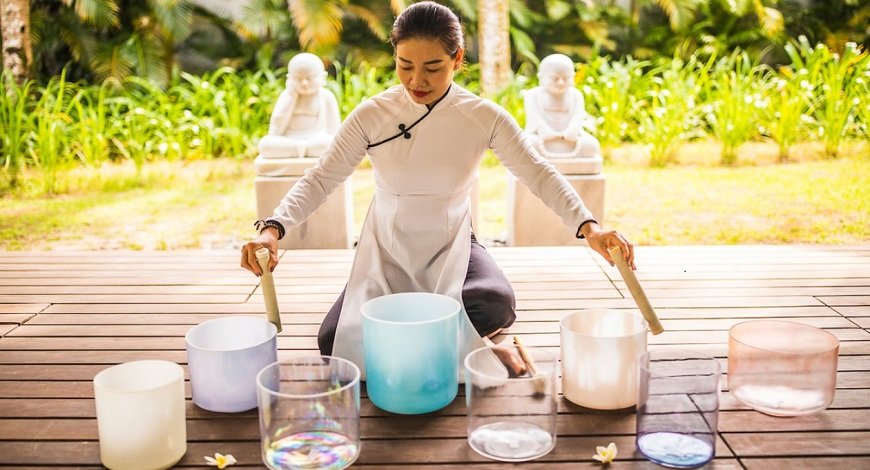
Vietnam emerges as Asia’s rising wellness hub blending ancient healing traditions with modern luxury and mindful tourism experiences.
Image Credit: StockShots
The nation’s wellness revolution signals more than a passing trend. Southeast Asia’s fastest-growing economy is challenging the dominance of Bali and Phuket in the global wellness tourism scene. In fact, this Asia Wellness News report highlights that Vietnam’s wellness industry is projected to outpace global averages, blending traditional practices like herbal medicine, Buddhist mindfulness, and natural detox rituals with modern luxury and science-backed therapies.
A booming billion-dollar wellness economy
According to market researcher IMARC, Vietnam’s wellness economy hit US$26.4 billion in 2024—soaring beyond its pre-pandemic level of US$17.4 billion in 2019. This growth covers diverse segments, from wellness real estate and nutrition to beauty and personal care. Wellness tourism alone is expected to expand by 9.3% annually throughout the decade, surpassing the global rate of 7.3%. Spa revenues, meanwhile, jumped to US$1.4 billion in 2023 from US$850 million in 2019—making Vietnam one of the top 20 spa markets worldwide.
Resort operators like Six Senses Con Dao have invested millions to redefine Vietnam’s health tourism landscape. “It’s unfortunate that the more affluent Vietnamese have had to travel to India or Thailand for wellness,” said Minh Tam Nguyen, general director of Six Senses Con Dao. “There are centuries of Vietnamese healing expertise that deserve recognition.”
Ancient wisdom meets modern self-care
Vietnam’s wellness retreats often center around holistic experiences—ranging from reiki and ayurvedic elixirs to herbal saunas, fluid cleanses, and singing bowl therapy. The appeal lies not just in healing but in connection. Bank executive Christine Lam, for instance, joined a detox retreat in Hue where participants bonded over a shared regimen of fasting, juicing, and hiking. “We didn’t eat for days but still felt energized and alive,” she said.
At Vietnam Detox, co-founded by health expert Dieter Buchner, participants undergo gradual fasting supported by mindful exercise in natural environments. “Detox requires activity,” Buchner explained. “We encourage people to walk, cycle, or even paddleboard so that their bodies use stored energy efficiently without losing muscle mass.” Such programs attract Vietnam’s growing upper-middle class, which is increasingly health-conscious and willing to pay for holistic escapes.
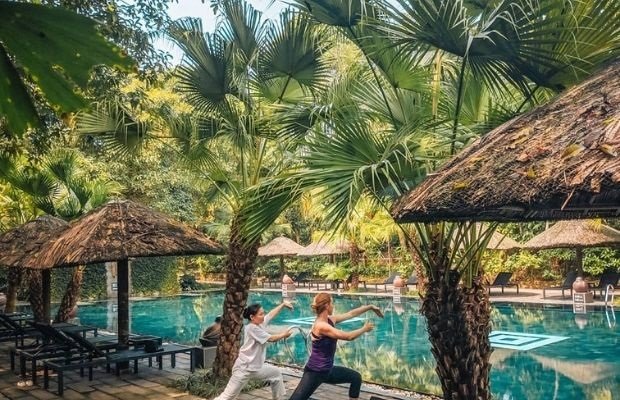
Wellness hotels and resorts in Vietnam are extremely cheap and real value for money when compared to Thailand or Indonesia
Image Credit: StockShots
Wellness as soft power and sustainability tool
What distinguishes Vietnam’s rise is its grounding in authentic traditions rather than imported fads. The country is, after all, home to Thich Nhat Hanh—the globally revered Zen master whose teachings on mindfulness and simplicity shaped modern spiritual wellness. Resorts such as Alba Wellness Valley and Four Seasons integrate his principles through forest bathing, mindful walking, and meditative silence. These experiences not only attract international visitors but also restore spiritual connections lost in modern urban life.
However, the boom also brings challenges. The government has repeatedly warned citizens against unregulated herbal remedies, pyramid health schemes, and misleading online advertising. Experts like counselor John Shepherd Lim caution that wellness can easily become toxic when driven by consumerism and fake positivity. “Self-care isn’t something you buy,” Lim said. “It’s about self-awareness—acknowledging your mental state, not masking it with supplements or massages.”
Digital discovery and the wellness-industrial complex
Social media has become a driving force behind Vietnam’s wellness trend. Platforms like TikTok, Instagram, and Xiaohongshu (RedNote) now shape consumer decisions, with over 50% of Asia-Pacific travelers using their phones to research health-related travel, according to Euromonitor. This digital influence helps small local operators gain visibility but also risks turning sacred practices into profit-driven spectacles.
Nanyang Technological University historian Michael Stanley-Baker points out that the commercialization of ancient remedies is not new. “Corporations are taking traditional Chinese or Vietnamese drugs, rebranding them with Western packaging, and erasing their cultural roots,” he said. Yet, he adds, such co-opting has existed since the 10th century, only now magnified by the internet and global marketing.
Luxury meets mindfulness
From the lush mountains of Quang Ninh to the beaches of Hoi An, wellness resorts are evolving into luxury sanctuaries. Namia Resort, opened in late 2024 by veteran industry expert Michelle Ford, merges spiritual therapies with indulgent comfort. “Vietnam has always had the same deep spirituality as Bali or Thailand,” Ford said. “We just never had the platform before to showcase it.”
With more affluent travelers and an expanding middle class—Knight Frank predicts Vietnam’s ultra-high-net-worth individuals will rise by 30% between 2023 and 2028—the country’s wellness market is poised for even greater growth. Yet, experts urge consumers to remain discerning. “Information is abundant, but so are misleading claims,” warned Euromonitor’s Prudence Lai. “Travelers must critically assess not only costs but the authenticity and safety of treatments.”
The new frontier of wellness travel
As Vietnam positions itself at the heart of Asia’s wellness renaissance, its challenge will be to sustain authenticity while expanding accessibility. From detox fasting and thermal springs to Buddhist-inspired mindfulness retreats, the nation’s approach symbolizes a holistic balance between body, mind, and spirit. More than a luxury industry, Vietnam’s wellness movement reflects a cultural reawakening—one that could redefine the meaning of self-care across the region.
In a world driven by stress, disconnection, and digital overload, Vietnam’s wellness evolution stands as a reminder that healing begins where simplicity meets spirituality—and that true health may come not from consumption but from conscious living. The country’s wellness future, if guided responsibly, could make it a global benchmark for sustainable, soulful tourism for decades to come.
For the latest Asia Wellness News, keep on logging to Thailand Wellness News