


Wellness Biohacking: From high-end longevity clinics in Bangkok to private biohacking groups in Los Angeles and London, peptides have rapidly evolved from niche research compounds into headline-grabbing wellness tools. These short chains of amino acids are now promoted for accelerating injury recovery, enhancing muscle growth, reducing stubborn fat, sharpening cognitive performance, improving libido, restoring gut health, and even slowing aspects of aging. Social media influencers openly discuss injection protocols, while specialized clinics advertise customized “peptide stacks” tailored to body composition, hormone levels, and metabolic goals. As demand grows across Asia and beyond, this Wellness Biohacking news report takes a comprehensive and carefully structured look at every major peptide driving the 2025–2026 biohacking craze, without omitting any of the compounds dominating conversations today.

Image: Thailand Wellness News
BPC-157: The So-Called Healing Accelerator
BPC-157, or Body Protection Compound-157, is derived from a naturally occurring protective protein found in human gastric juice. Within wellness communities, it is widely claimed to accelerate healing of muscles, tendons, ligaments, and connective tissue. Athletes frequently turn to it after strains, tears, or surgery, while others use it to support gut lining repair in cases of ulcers, IBS, or inflammatory digestive complaints.
Users also report reduced systemic inflammation and possible neuroprotective effects. It is commonly administered via subcutaneous injection near the injury site, although oral forms are marketed for gastrointestinal support. Despite strong anecdotal enthusiasm and promising animal data, robust long-term human trials remain limited.
TB-500: Regeneration and Mobility Support
TB-500 is a synthetic fragment of Thymosin Beta-4, a naturally occurring protein involved in cell migration and wound repair. In biohacking circles, it is described as enhancing tissue regeneration, promoting angiogenesis, reducing inflammation, and improving flexibility and mobility following injury or intense training.
It is frequently stacked with BPC-157 in what enthusiasts call an “ultimate recovery protocol.” While early research suggests potential regenerative properties, standardized dosing guidelines and comprehensive safety data are still lacking.
CJC-1295 and Ipamorelin: The Growth Hormone Stack
One of the most popular combinations in anti-aging clinics is CJC-1295 paired with Ipamorelin. CJC-1295 is a growth hormone-releasing hormone analog, available with or without DAC (Drug Affinity Complex). Ipamorelin is a selective growth hormone secretagogue that stimulates growth hormone release without significantly increasing cortisol or prolactin levels.
Image: Thailand Wellness News
Together, they are claimed to increase natural growth hormone and IGF-1 levels. Reported benefits include lean muscle development, reduced visceral fat, improved sleep quality, enhanced recovery, stronger bones, better skin elasticity, and improved overall vitality. Most users administer nightly subcutaneous injections and follow cycling schedules, such as five days on and two days off.
Sermorelin: The Earlier GH Stimulator
Sermorelin, which has a history of FDA-approved use for growth hormone deficiency, stimulates the body’s own production of growth hormone. In modern wellness settings, it is marketed as a more conservative alternative to synthetic growth hormone injections. Advocates cite improvements in muscle tone, recovery, and anti-aging markers, although its primary medical use remains specific and regulated.
MK-677 (Ibutamoren): The Oral GH Booster
Although technically not a peptide, MK-677, also known as Ibutamoren, is frequently grouped into peptide protocols. It is an oral ghrelin mimetic that increases growth hormone secretion.
Users commonly report deeper sleep, increased appetite, improved muscle mass, and better recovery. However, potential drawbacks include water retention, increased hunger leading to fat gain, and possible effects on insulin sensitivity. Long-term safety data in healthy individuals remain incomplete.
AOD-9604: Targeting Stubborn Fat
AOD-9604 is derived from the C-terminal fragment of human growth hormone (amino acids 177–191). It is marketed for stimulating lipolysis and inhibiting new fat formation without significantly raising overall growth hormone levels or affecting blood sugar regulation.
Wellness clinics often promote it for reducing stubborn fat deposits, especially in the abdominal area. It is commonly stacked with CJC-1295, Ipamorelin, or Tesamorelin for body recomposition protocols.
Tesamorelin: Visceral Fat Reduction
Tesamorelin is a growth hormone-releasing hormone analog with FDA approval for reducing visceral fat in HIV-associated lipodystrophy. In broader wellness use, it is promoted for decreasing abdominal fat, improving metabolic markers, and preserving lean muscle mass.
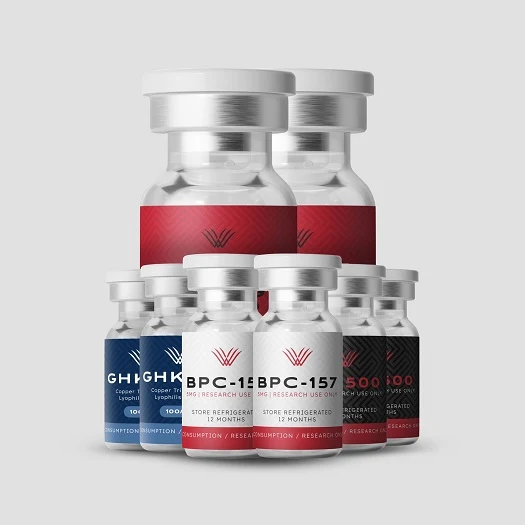
Image: Thailand Wellness News
Daily subcutaneous injections are typical. While its approved medical application is specific, off-label interest has expanded significantly in anti-aging and metabolic optimization clinics.
GHK-Cu (Copper Tripeptide-1): Skin and Hair Restoration
GHK-Cu, or Copper Tripeptide-1, occurs naturally in human plasma but declines with age. It is widely used in topical creams to stimulate collagen and elastin production, promote firmer skin, accelerate wound healing, and improve overall skin radiance.
Some clinics offer injectable versions, claiming systemic regenerative and anti-inflammatory effects, as well as enhanced hair growth. Although preliminary research supports its role in tissue repair, large-scale clinical data for systemic anti-aging applications remain limited.
PT-141 (Bremelanotide) and Melanotan II: Libido and Tanning
PT-141, also known as Bremelanotide, is approved in specific medical contexts for sexual dysfunction. In wellness communities, it is used more broadly for enhancing libido and sexual performance in both men and women.
Melanotan II stimulates melanocortin receptors and is marketed for tanning effects, appetite suppression, and libido enhancement. However, regulatory concerns and safety questions persist, particularly when sourced from unregulated suppliers.
Epithalon, Pinealon, Semax, and Selank: Longevity and Cognitive Enhancement
A smaller yet rapidly growing segment of the peptide movement focuses on cognitive function and longevity. Epithalon is promoted for potential telomere support and lifespan extension. Pinealon is discussed for neuroprotective benefits. Semax and Selank are described as nootropic peptides that may enhance mental clarity, reduce anxiety, improve stress resilience, and support mood balance.
Image: Thailand Wellness News
Much of the research supporting these compounds originates from early-stage or regional studies. While user testimonials are abundant, mainstream clinical validation is still evolving.
The Evidence Gap and Emerging Safety Concerns
Despite the explosive popularity of these compounds, it is critical to acknowledge that, to date, most supporting evidence for many of these peptides comes primarily from animal studies, small pilot trials, or laboratory-based research. There have been no large-scale, properly designed randomized controlled clinical trials involving broad human cohorts that definitively validate the safety, long-term effects, or claimed performance and anti-aging benefits of the majority of these peptides when used for wellness optimization.
The absence of large cohort randomized clinical trials means that dosage protocols circulating online are not standardized through rigorous human validation. Many stacking strategies are experimental and extrapolated from limited data rather than evidence-based consensus. This creates a significant scientific gap between marketing claims and verified clinical outcomes.
Equally concerning is the emerging awareness that injecting or consuming bioactive peptides may, in certain individuals, trigger unintended immune responses. Because peptides interact directly with signaling pathways and immune-modulating mechanisms, there is a theoretical and biologically plausible risk of provoking autoimmune reactions. In rare but serious scenarios, immune dysregulation could escalate into severe systemic inflammatory responses. Autoimmune activation can be unpredictable, and in extreme cases, complications may become life-threatening if not recognized and managed promptly.
In addition to autoimmune concerns, other documented or theoretical risks include hormonal imbalance, insulin resistance, fluid retention, cardiovascular strain, injection-site infections, contamination from improperly compounded products, and long-term endocrine disruption. Quality control remains inconsistent in unregulated markets, further amplifying risk.
The growing popularity of peptides reflects a powerful cultural drive toward optimization and longevity. However, enthusiasm must be balanced with scientific humility. While certain peptides, such as Tesamorelin and GLP-1 receptor agonists, have regulatory approval for specific medical conditions, the broader use of many other compounds for anti-aging, muscle enhancement, fat loss, cognitive improvement, or libido amplification remains largely unvalidated in large human populations.
Peptides are not benign supplements. They are biologically active signaling molecules capable of altering complex hormonal, metabolic, and immune pathways. Until comprehensive human trials are conducted, individuals considering their use should do so only under strict medical supervision, with full laboratory monitoring and informed awareness of potential risks.
The peptide phenomenon continues to expand globally, including within Thailand’s rapidly growing wellness sector. Whether it ultimately becomes a regulated, evidence-based therapeutic frontier or remains partially driven by hype will depend on rigorous scientific investigation, regulatory oversight, and responsible clinical practice.
References:
https://www.mdpi.com/2218-273X/15/1/88
https://www.nature.com/articles/s41392-022-00904-4
https://journals.sagepub.com/doi/10.1177/15563316251355551
https://www.mdpi.com/1424-8247/18/2/185
https://www.mdpi.com/2073-4409/10/6/1343
https://santeclinics.com/blog/tb-500-peptide-healing-science
https://academic.oup.com/jcem/article-abstract/91/3/799/2843281
https://www.irejournals.com/paper-details/1714043
https://pmc.ncbi.nlm.nih.gov/articles/PMC2699646
https://www.acpjournals.org/doi/10.7326/0003-4819-149-9-200811040-00003
https://jofem.org/index.php/jofem/article/view/213/278
https://pubmed.ncbi.nlm.nih.gov/20554713
https://www.mdpi.com/2079-9284/5/2/29
For the latest Wellness Biohacking protocols, keep on logging to Thailand Wellness News.
Medical Disclaimer: All content published by Thailand Wellness News is intended for informational and educational purposes only. It is not medical advice, diagnosis, or treatment. Readers must not attempt to use, apply, or experiment with any protocols, compounds, or therapies mentioned without first consulting a qualified and licensed medical doctor. Many findings discussed are experimental or preliminary, and only a licensed healthcare professional can determine what is safe and appropriate for an individual’s specific medical condition.