


Wellness News: Perimenopause has long been one of the most misunderstood and under-discussed stages of a woman’s life, often dismissed as vague discomfort rather than a complex health transition. Now, a new piece of wellness technology is challenging that silence. Peri, a discreet wearable sensor developed by IdentifyHer and recently crowned winner of the official Best Wellness Tech category at CES, is promising to give women clearer answers, real data, and a stronger voice during a phase of life too often overlooked by medicine.

Image Credit: Peri
A Life Stage That Rarely Comes with a Guidebook
Perimenopause can begin years, sometimes decades, before menopause itself, yet many women enter it without warning. Symptoms can be dramatic or subtle, physical or emotional, and frequently confusing. Hot flashes and night sweats are the most talked about, but anxiety, brain fog, sleep disturbances, joint pain, menstrual irregularities, and sudden mood changes are just as common. Many women are left wondering whether what they are experiencing is hormonal, stress-related, or a sign of something more serious.
Surveys from the UK and the United States reveal a striking lack of awareness. Large numbers of women report feeling completely uninformed about perimenopause until symptoms disrupt daily life. This Wellness News report highlights how technology is stepping in to offer clarity where education and healthcare systems have fallen short.
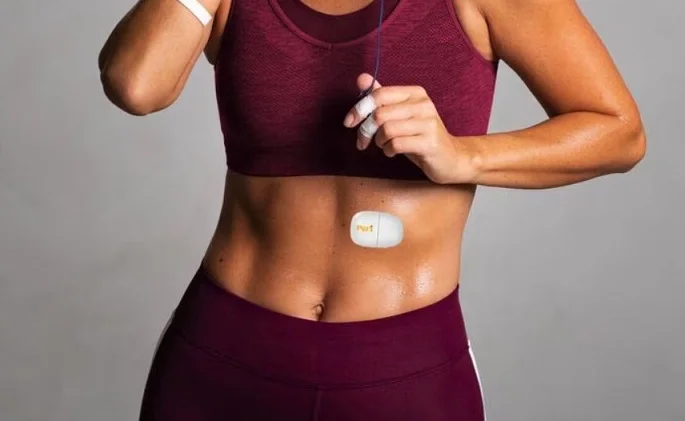
Image Credit: Peri
Introducing Peri and How It Works
Peri is a small, adhesive wearable that attaches to the torso, typically along the ribcage beneath the breast. Its design is reminiscent of a continuous glucose monitor, but without needles or discomfort. Once applied, the sensor continuously tracks physiological markers associated with perimenopausal symptoms, including hot flashes, night sweats, sleep quality, anxiety patterns, and menstrual changes.
The collected data is transmitted to a companion app powered by artificial intelligence. Instead of offering generic advice, the app analyzes patterns over time and delivers personalized insights. Users can see how symptoms evolve, what may be triggering them, and whether lifestyle changes or treatments are making a measurable difference.
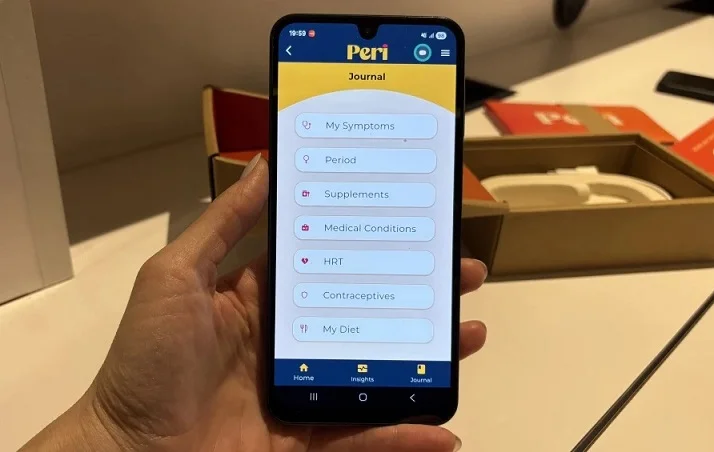
Image Credit: Peri
Turning Personal Data into Personal Power
One of the most significant challenges women face during perimenopause is being taken seriously by healthcare providers. Research cited by IdentifyHer indicates that nearly half of women in perimenopause waited more than a year to receive treatment, with some waiting over five years. Women of color face even greater barriers, often experiencing symptoms earlier, longer, and more intensely.
By providing objective data, Peri aims to change that dynamic. Instead of relying solely on memory or vague descriptions, users can bring detailed symptom records to medical appointments. This helps facilitate informed discussions about treatment options, whether that involves dietary changes, exercise, supplements, antidepressants, or hormone therapy.
Expert Perspectives on Digital Menopause Care
Medical professionals specializing in women’s health have welcomed tools that support better symptom tracking. Doctors note that many perimenopausal symptoms, particularly hot flashes and sleep disruptions, occur during the night and may go unnoticed or underestimated. Continuous monitoring can reveal patterns that would otherwise remain hidden.
Experts also emphasize the broader health implications. Research increasingly links severe perimenopausal symptoms, such as intense hot flashes and night sweats, to future risks including cardiovascular disease and neurodegenerative conditions. Understanding symptom severity and frequency is not just about comfort; it can be a window into long-term health.
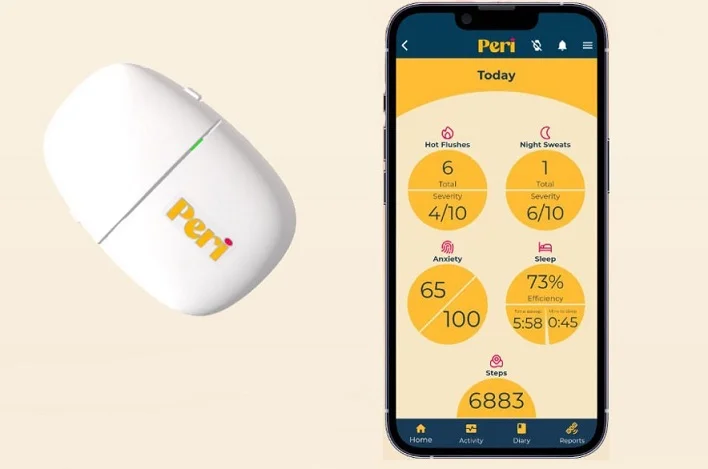
Image Credit: Peri
Closing the Gender Data Gap
Beyond individual benefits, Peri represents a larger shift in wellness technology. Historically, women’s health data has been underrepresented in medical research. By collecting anonymized, women-specific health data, tools like Peri could help close that gap and improve understanding of how hormonal transitions influence long-term outcomes.
IdentifyHer’s leadership has stated that the goal is not only to support women day to day, but also to build a clearer scientific picture of perimenopause. With better data comes better research, better treatments, and ultimately, better care.
A New Sense of Clarity in a Confusing Transition
Peri is currently available for preorder at a price of US$449, with shipments expected after CES. While wearable technology should always be approached thoughtfully, many experts agree that, in this case, more insight may be exactly what women need. For those navigating the uncertainty of perimenopause, having clear data, personalized guidance, and tangible validation can be deeply empowering.
As awareness grows and conversations become more open, innovations like Peri suggest a future where perimenopause is no longer endured in silence, but understood, managed, and respected as a critical stage of women’s wellness.
For more details on Peri, visit:
For the latest on new Wellness Gadgets, keep on logging to Thailand Wellness News.