Asia Wellness News: Malaysia Steps into the Spotlight
Malaysia’s position in the global wellness arena has taken a decisive leap forward thanks to new research released by the Global Wellness Institute (GWI). The comprehensive findings, produced in partnership with Green Wellness Malaysia, reveal a thriving 31.8 billion dollar wellness economy that has quietly transformed the nation into one of Asia Pacific’s most compelling wellness growth stories.
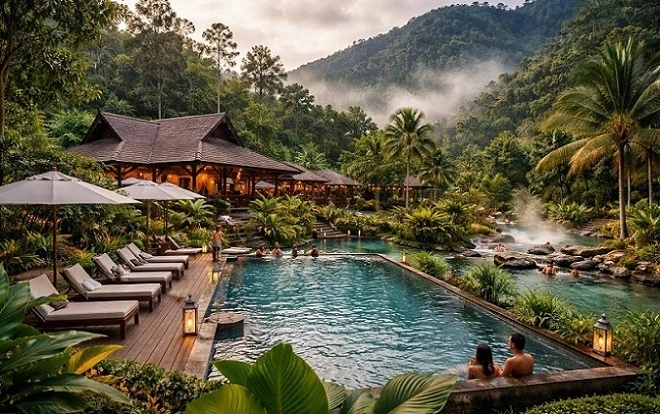
Malaysia’s cultural and natural strength is powering a wellness economy ready for regional leadership.
Image Credit: Thailand Wellness News
The study ranks Malaysia tenth among 45 regional markets and 29th out of 218 global wellness economies, a position achieved through sustained development rather than short-lived hype. It also shows Malaysia placing within the top ten across wellness real estate, mental wellbeing, beauty and personal care, wellness tourism, fitness, physical activity and thermal and mineral spring experiences. This Asia Wellness News report unpacks how these diverse strengths now combine to move the country from emerging player to serious wellness contender.
The new data is accessible via GWI’s Geography of Wellness platform, now expanded through its collaboration with Green Wellness Malaysia.
The company sits at the heart of the sector’s onward push, serving as a distributor, importer and professional adviser while also operating the growing International Wellness Expo. For the first time, Malaysia’s wellness growth is laid out in a national profile rather than fragmented case studies, allowing government agencies, brands and investors to evaluate clear directions of opportunity.
Growth Driven by Innovation and Lifestyle Demand
GWI chair and chief executive Susie Ellis highlighted Malaysia’s rise as a moment of global relevance. She described a wellness economy shaped by cultural strength, natural environments and a new generation of entrepreneurs who are tapping unmet needs. The data backs that assertion. Between 2019 and 2024, wellness real estate expanded 13.5 percent annually as Malaysians increasingly seek built environments designed for healthier living and greater harmony with nature. Public health, prevention and personalized medicine sectors posted 12.6 percent yearly growth, reflecting widespread demand for services that keep people well rather than only treat illnesses when they arise. Mental wellness surged 7.6 percent—a trend mirrored worldwide but here powered by unique local cultural contexts. Spas grew 6.7 percent, physical activity 5.5 percent and traditional and complementary medicine 5.2 percent.
Green Wellness Malaysia founder Datin Dorph Peng described the GWI partnership as both an honor and a responsibility. She framed data transparency as a catalyst for action, noting that IWE and related platforms are already helping companies and institutions convert insights into programs, partnerships and innovation. By positioning Malaysia as the wellness gateway to the ASEAN region, her team aims to ensure that growth benefits communities, not only corporations.
A Landscape Made for Wellbeing
Malaysia’s natural environment is its most visible wellness ambassador. Few countries offer such diversity—from 130-million-year-old rainforest ecosystems and highland retreats to cascading waterfalls, marine playgrounds and curative mineral springs that draw international visitors. These spaces are not theoretical resources. They are widely accessed by Malaysians and visitors who hike, swim, train, meditate and heal in landscapes where ancient biodiversity meets modern aspiration.
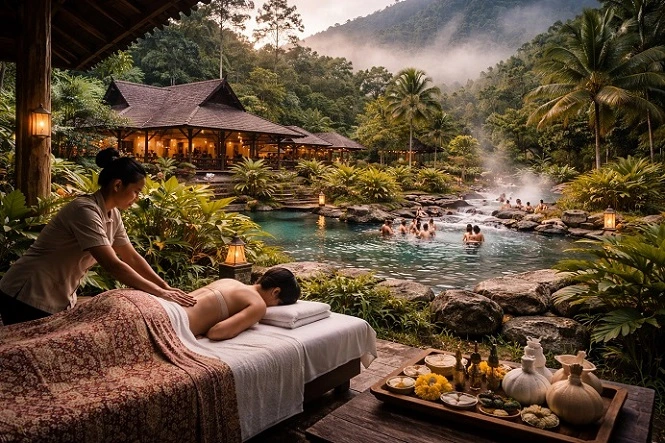
Malaysia’s traditional “urut’ massage is now gaining recognition across the world as a healthy therapeutic ‘body work’
Image Credit: Thailand Wellness News
These natural factors sit atop deep cultural layers. Wellness is not a borrowed trend in Malaysia—it is woven into how people eat, move, socialize and rest. The Malay tradition of urut massage remains a powerful therapeutic and cultural practice. Traditional Chinese Medicine maintains widespread use among urban and rural populations alike, offering herbal formulations, acupuncture and qi balancing techniques. Ayurveda—practiced both formally and within family traditions—brings dietary regulation, cleansing principles and mindfulness rituals. Indigenous groups practice forest-based healing that draws from the scent, touch and energy of plants, roots and earth. The coexistence of these systems creates a marketplace that favors authenticity over novelty and roots wellness in lived heritage.
Cuisine further reinforces wellbeing. Malaysian food emphasizes freshness, therapeutic ingredients and nutrient-rich produce from seas, farms and villages. Turmeric, ginger, lemongrass, kaffir lime, pandan and galangal are used as preventive medicine as much as flavoring. Even durian—the bold, beloved king of fruits—is valued for its energy-boosting qualities and mood-lifting effects.
The Rise of Holistic Consumer Lifestyles
Spas, boutique studios, wellness resorts and fitness hubs have expanded to meet growing demand across Malaysia’s urban centers. Malaysians are embracing strength training, yoga, pilates, group cycling and hybrid formats that combine community and coaching. Meanwhile, the nation’s well-regarded healthcare infrastructure is accelerating the medical wellness category—attracting international travelers seeking affordable diagnostics, integrated treatment and prevention-led care.
Eco-consciousness is also transforming the sector. New resorts and retreats aim to preserve and celebrate their surroundings rather than overshadow them. Forest bathing, herbal baths, energy therapy, mindfulness workshops and cultural immersion are being introduced to contemporary audiences who want experiences anchored in place, not disconnected from reality. Many operators are renovating traditional forms to appeal to modern sensibilities rather than abandoning them for imported concepts.
Malaysia’s Path Forward
The research demonstrates that Malaysia’s wellness strengths are structural, not seasonal. The country is nurturing a unique combination of natural wealth, multicultural wisdom and modern capability. Entrepreneurs increasingly pair indigenous knowledge with scientific backing, exporting local expertise into product design, certification, app development, nutraceuticals and lifestyle coaching. As wellness continues to expand globally—reshaping where people live, how they travel and what they consume—Malaysia’s authentic offerings are likely to grow even more attractive.
Looking ahead, the greatest opportunity may lie in scaling old knowledge responsibly, ensuring that wellness remains accessible and inclusive rather than exclusive and elitist. The country is well placed to do this, with community culture, environmental richness and institutional support aligned around growth. Malaysia is not merely joining the global conversation—it is helping redefine it by demonstrating that wellness thrives best where nature, culture and innovation stand side by side.
For the latest Asia Wellness News, keep on logging to Thailand Wellness News.