


Wellness Biohacking: A New Wellness Trend Driven by Cellular Longevity
Fisetin has surged to the forefront of global wellness culture as biohackers and health-focused consumers search for the next big breakthrough in anti-aging. A naturally occurring flavonoid found in strawberries, apples, persimmons, cucumbers, and onions, fisetin is now widely promoted as the most promising natural senolytic available over the counter. Its rise is tied to an explosive interest in targeting senescent cells, often called zombie cells, which accumulate with age and contribute to inflammation, weakened immunity, metabolic disturbances, and tissue degeneration.
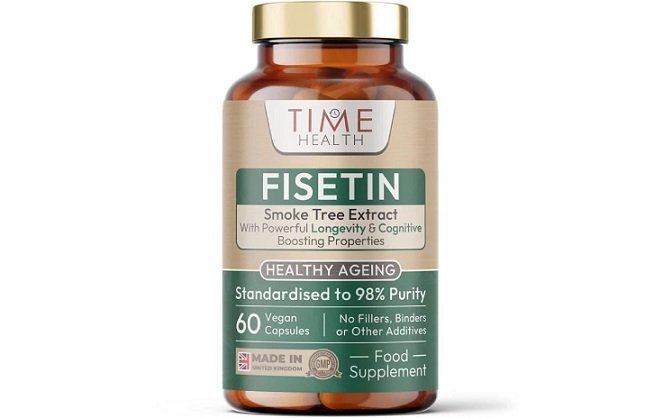
Fisetin is rapidly becoming one of the most talked-about natural senolytics in global wellness culture.
Image Credit: StockShots
Why Fisetin Is Becoming the Star of Senolytics
The growing appeal of fisetin is driven not only by its natural origin but by its scientific backing. A number of preclinical studies in the past decade have demonstrated its ability to selectively eliminate senescent cells and improve markers of aging in animal models. At the same time, online wellness communities, supplement companies, and longevity influencers have been pushing fisetin into mainstream conversation. The momentum has led to expanded searches for clinical validation and safer dosing guidelines, and this Wellness Biohacking news report reflects how interest in fisetin now spans from casual supplement users to highly disciplined biohackers looking for measurable performance and recovery gains.
How Fisetin Works Inside the Body
Senescent cells are dysfunctional cells that refuse to die when they should. Instead of undergoing normal programmed cell death, they linger and release harmful inflammatory agents known as SASP molecules. Over time, this contributes to chronic inflammation, tissue degradation, and accelerated biological aging.
Fisetin operates by targeting the pro-survival pathways inside these senescent cells. When these pathways are disrupted, the damaged cells finally undergo apoptosis and are cleared by the body. This selective clearing appears to rejuvenate tissues, reduce systemic inflammation, and improve the function of organs and metabolic systems in animal studies.
Researchers have also noted that fisetin exhibits powerful antioxidant and anti-inflammatory effects independent of its senolytic activity, giving it a dual role in cellular protection.
Why Fisetin Stands Out Among Natural Senolytics
Among plant-based senolytics, fisetin is currently the most researched and consistently effective compound in laboratory models. While quercetin, EGCG, curcumin, and resveratrol all demonstrate senolytic or senomorphic properties, fisetin appears to outperform them in clearing a wider range of senescent cells.
This has made it the favored option for wellness enthusiasts who insist on evidence-based interventions. Supplement brands have quickly adapted, offering high-dose fisetin capsules, liposomal formulations for enhanced absorption, and combination blends pairing fisetin with quercetin or other polyphenols to mimic the synergistic effects seen in early studies.
Human Studies and the Search for Safe Dosing
Despite its popularity, experts caution that human trials remain limited. Several early-stage studies are underway exploring fisetin’s role in frailty reduction, metabolic health, neurological protection, and systemic inflammation. The doses used in research are often far higher than dietary intake, which means consumers experimenting with fisetin supplements are navigating an area where long-term safety data is still emerging.
Biohackers often take fisetin intermittently rather than daily because senescent cells take time to accumulate again, a strategy inspired by preclinical protocols. Many wellness communities also warn against assuming that benefits observed in mice translate directly to humans.
A Wellness Fad Moving Toward Mainstream Longevity Science
The fascination with fisetin sits at the intersection of modern wellness culture and serious biomedical research. It reflects growing public awareness of cellular aging pathways, inflammation, and longevity science. Anti-aging skincare companies are now exploring senolytic-inspired formulas, and pharmaceutical researchers are designing more targeted delivery systems that may eventually enhance fisetin’s bioavailability.
As with any fast-growing wellness trend, experts recommend caution, scientific literacy, and medical guidance before adopting high-dose senolytic protocols. Yet fisetin’s rise signals how longevity science continues to inspire new consumer behavior, with many viewing senolytics as a future pillar of proactive health.
The growing enthusiasm around fisetin highlights a cultural shift toward science-driven wellness, where people want interventions that work at the cellular level rather than simply masking symptoms. While research continues to evolve, fisetin’s trajectory suggests it may remain a major talking point in wellness, biohacking, and longevity for years to come. As interest sharpens and new trials progress, the world will gain clearer insight into whether this natural flavonoid can live up to the hopes placed upon it by today’s wellness pioneers and aging researchers. For many, the promise of reducing inflammation, improving vitality, and potentially slowing biological aging is compelling enough to keep fisetin in the spotlight, even as the science is still developing and long-term outcomes are not yet fully known.
References:
https://www.sciencedirect.com/science/article/pii/S0047637424000952
https://www.thelancet.com/journals/ebiom/article/PIIS2352-3964(18)30373-6/fulltext
https://chemistry-europe.onlinelibrary.wiley.com/doi/full/10.1002/chem.202403755
https://www.mdpi.com/2076-3921/12/8/1646
https://academic.oup.com/stmcls/article/41/7/698/7190776
For the latest on Wellness Biohacking, keep on logging to Thailand Wellness News.