


A little-known compound once associated with the B-vitamin family is attracting renewed attention across the wellness industry, with supplement manufacturers promoting its potential benefits for graying hair, aging skin, and cellular health. However, scientists warn that the substance being sold as Vitamin B10 is not actually an essential vitamin, while evidence supporting many of its advertised benefits remains surprisingly limited.
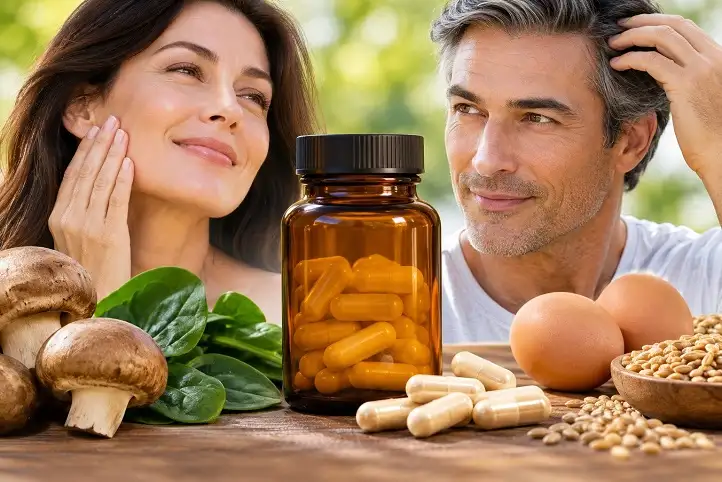
Image Credit: Thailand Wellness News
The global wellness industry has developed a fascination with rediscovering forgotten nutrients, and Vitamin B10 appears to be its latest attraction.
Increasingly promoted in beauty supplements and online wellness discussions, the compound is being presented as a nutritional discovery capable of supporting healthier skin, restoring natural hair color, and combating visible signs of aging. However, this Wellness Supplements news report examines how the growing enthusiasm surrounding Vitamin B10 contrasts with its established biochemical identity and the relatively limited clinical evidence supporting its use.
What Exactly Is Vitamin B10?
Vitamin B10 is another name for para-aminobenzoic acid, commonly abbreviated as PABA. Although historically associated with the B-complex family, PABA is not officially recognized as an essential vitamin because humans do not have an established dietary requirement for it.
The compound has been known to chemists since the nineteenth century and attracted nutritional interest during the early development of vitamin research. Scientists initially investigated whether it belonged alongside established B vitamins, but subsequent research failed to demonstrate that humans develop a specific deficiency disease when dietary PABA is absent.
PABA nevertheless has important biological functions, particularly among microorganisms. Certain intestinal bacteria use it to manufacture folate, or vitamin B9, which supports DNA synthesis, cell division, and normal tissue development.
However, bacterial folate production does not eliminate the human requirement for dietary folate. Consequently, PABA supplementation cannot replace established folate sources or medically recommended folic acid supplements.
Why Wellness Companies Are Rediscovering PABA
The renewed commercial interest in Vitamin B10 reflects the expanding market for supplements promising beauty benefits from within.
Unlike unfamiliar chemical names, the designation Vitamin B10 immediately suggests membership in a recognized nutritional family. Consumers already associate B vitamins with metabolism, neurological health, and cellular functioning, making the terminology commercially appealing.
Social media has further encouraged interest in lesser-known compounds, particularly those promoted as overlooked discoveries.
PABA is also relatively inexpensive to manufacture, allowing supplement companies to incorporate it into specialized formulations targeting hair pigmentation, skin appearance, and healthy aging.
However, the popularity of an ingredient does not establish its effectiveness. Nutritional classification and clinical benefits must be supported by reproducible scientific evidence rather than marketing narratives.
Can Vitamin B10 Really Reverse Gray Hair?
Perhaps the most intriguing claim surrounding PABA concerns its alleged ability to restore natural hair pigmentation.
Hair becomes gray primarily because pigment-producing melanocytes within hair follicles progressively lose their ability to maintain melanin production. Genetics and aging are major contributors, although certain nutritional deficiencies and medical conditions can also influence premature graying.
Interest in PABA originated partly from older investigations examining whether supplementation could improve hair pigmentation in selected individuals.
Some historical reports described changes in hair color following treatment, but these observations involved limited research populations and lacked the rigorous controls expected in modern clinical trials.
Importantly, there is no convincing contemporary evidence demonstrating that PABA reliably reverses ordinary age-related graying.
Researchers also have not established an effective, safe oral dosage for restoring pigmentation. Consumers should therefore approach products promising dramatic hair-color restoration with considerable skepticism.
Claims About Skin Rejuvenation Remain Unproven
PABA is also being promoted for skin elasticity, collagen support, and the prevention of visible aging.
These claims partly reflect historical medical interest in potassium aminobenzoate, a related pharmaceutical preparation investigated for conditions involving abnormal fibrous tissue.
However, pharmaceutical applications involving specific formulations and medically supervised dosages cannot be directly translated into cosmetic benefits from ordinary dietary supplements.
Although collagen maintenance and cellular metabolism are important aspects of skin health, clinical evidence demonstrating that oral PABA supplementation significantly reduces wrinkles or improves skin firmness remains insufficient.
Consumers should distinguish between biological plausibility and demonstrated therapeutic effectiveness.
Its Earlier Role in Sunscreen Products
Interestingly, PABA was once considerably better known as a sunscreen ingredient than as a nutritional supplement.
During the 1970s and 1980s, manufacturers frequently incorporated PABA into sunscreen formulations because it absorbed ultraviolet B radiation associated with sunburn.
Its popularity eventually declined as concerns emerged regarding allergic contact dermatitis, skin irritation, and clothing discoloration.
Newer ultraviolet filters offered more acceptable cosmetic properties and improved options for broad-spectrum protection.
The US Food and Drug Administration subsequently determined that available evidence was insufficient to classify PABA as generally recognized as safe and effective for over-the-counter sunscreen use.
This regulatory history concerns topical sunscreen applications and should not automatically be interpreted as an identical safety assessment of oral supplementation.
Potential Risks of Taking PABA Supplements
Despite its historical association with vitamins, PABA is not necessarily harmless when consumed in concentrated quantities.
Oral products may contain hundreds of milligrams per serving, sometimes considerably more than amounts ordinarily encountered through food.
Reported adverse effects include nausea, vomiting, abdominal discomfort, diarrhea, and allergic reactions. Serious liver toxicity has also been associated with excessive exposure.
PABA may additionally interfere with sulfonamide antibiotics because these medications disrupt bacterial folate synthesis through pathways involving PABA.
People taking prescription medications, particularly sulfonamide antibiotics, should seek medical advice before using PABA-containing products.
No established recommended dietary allowance exists for PABA, and the absence of an official tolerable upper intake level should not be interpreted as evidence that unlimited consumption is safe.
Is Supplementation Actually Necessary?
PABA occurs naturally in various foods, including mushrooms, whole grains, eggs, and certain vegetables.
However, because it is not considered an essential human nutrient, nutrition authorities do not recommend a specific daily intake.
There is also no recognized PABA deficiency syndrome requiring routine supplementation.
For consumers concerned about healthy hair and skin, adequate protein intake, balanced nutrition, sun protection, and assessment of genuine nutritional deficiencies offer more established approaches than relying on speculative supplementation claims.
What Consumers Should Understand
The resurgence of Vitamin B10 illustrates how historical nutritional terminology can acquire new commercial appeal without corresponding scientific breakthroughs. Although PABA participates in important microbial biochemical processes, its biological activity does not establish that supplementation improves human appearance or prevents aging. Until properly designed clinical trials demonstrate meaningful benefits and clarify appropriate dosages, consumers should regard Vitamin B10 primarily as an experimental wellness ingredient rather than an essential addition to their daily nutritional routine.
References:
https://pmc.ncbi.nlm.nih.gov/articles/PMC6290285
https://pmc.ncbi.nlm.nih.gov/articles/PMC6995950
https://pubmed.ncbi.nlm.nih.gov/14794992
https://www.explorationpub.com/uploads/Article/A100898/100898.pdf
https://pubmed.ncbi.nlm.nih.gov/37893060
https://pubmed.ncbi.nlm.nih.gov/42085088
https://pubmed.ncbi.nlm.nih.gov/9422444
https://pubmed.ncbi.nlm.nih.gov/2317082
https://pubmed.ncbi.nlm.nih.gov/9422444
Medical Disclaimer: All content published by Thailand Wellness News is based on scientific research and is intended for informational and educational purposes only. It is not medical advice, diagnosis, or treatment. Readers must not attempt to use, apply, or experiment with any protocols, compounds, or therapies mentioned without first consulting a qualified and licensed medical doctor. Many findings discussed are experimental or preliminary, and only a licensed healthcare professional can determine what is safe and appropriate for an individual’s specific medical condition.