


Wellness News: Carnosic Acid from Rosemary and Sage Emerges as Brain Health Ally
In kitchens across Thailand and around the world, rosemary and sage have long been valued for their aromatic depth in curries, teas, and roasted dishes. Beyond their culinary appeal, these herbs have also held a quiet place in traditional healing practices. Today, a naturally occurring phytochemical compound within them is gaining serious scientific attention. Carnosic acid, a potent diterpene found abundantly in rosemary and sage leaves, is now being recognized for its strong anti-inflammatory and neuroprotective properties, with growing evidence suggesting it may help clear harmful brain plaques and slow the progression of neurodegenerative diseases such as Alzheimer’s.
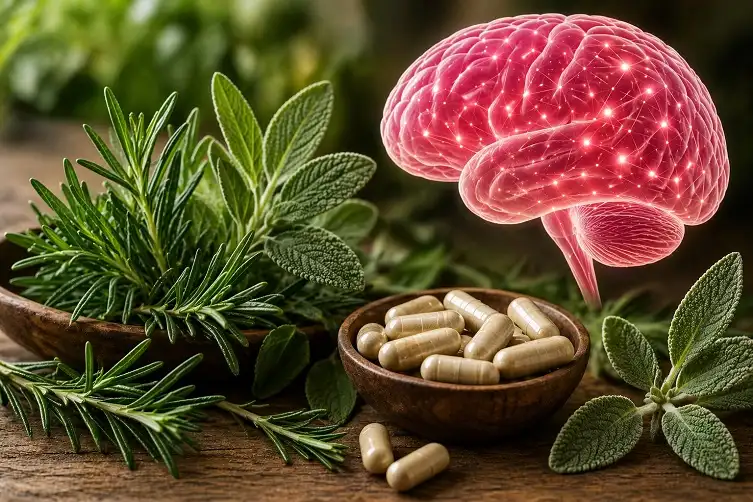
Image Credit: Thailand Wellness News
Delving into the latest scientific developments surrounding this botanical compound, this Wellness News report highlights why researchers increasingly view carnosic acid as a promising addition to proactive brain health strategies. What began as traditional remedies for memory and vitality is now supported by modern laboratory research, offering renewed hope for individuals facing age-related cognitive decline.
How Carnosic Acid Supports Brain Function
Carnosic acid is particularly notable for its ability to activate the Nrf2 pathway, often described as the body’s master regulator of antioxidant defense. By stimulating this pathway, the compound enhances the body’s ability to neutralize harmful free radicals while simultaneously reducing inflammation. This dual action not only protects neurons from long-term damage but also triggers autophagy, the body’s natural cellular cleanup mechanism that removes toxic protein accumulations.
Laboratory studies have demonstrated that carnosic acid can significantly reduce amyloid-beta plaques—sticky protein deposits that disrupt memory pathways—as well as decrease levels of phosphorylated tau proteins, which interfere with communication between brain cells. Importantly, the compound is able to cross the blood-brain barrier, allowing it to act directly within brain tissue. It also helps regulate overactive microglia, the immune cells of the brain, preventing chronic inflammation that contributes to cognitive decline. Unlike many synthetic treatments, carnosic acid appears to activate selectively in areas experiencing oxidative stress, suggesting a lower risk of side effects with long-term use.
2025 Study Highlights Breakthrough Potential
A major milestone came with a study published in February 2025 in the journal Antioxidants. Researchers at Scripps Research developed a more stable form of the compound, known as diAcCA, designed to overcome the instability of natural carnosic acid. Using the widely accepted 5xFAD mouse model of Alzheimer’s disease, the team administered the compound orally over a three-month period.
The findings were striking. Treated mice showed notable improvements in memory performance, including enhanced results in the Morris water maze and fear conditioning tests. Further analysis of brain tissue revealed increased synaptic density, indicating stronger neural connections, alongside reduced amyloid plaques, lower levels of phospho-tau tangles, and decreased markers of inflammation. Senior researcher Stuart A. Lipton, MD, PhD, noted that the compound not only slowed disease progression but also restored cognitive function closer to normal levels—an uncommon outcome in such models. These results build on earlier findings, including a comprehensive 2023 review that documented carnosic acid’s neuroprotective effects across multiple neurodegenerative conditions.
Blending Tradition with Modern Wellness
For generations, herbal traditions in Thailand and beyond have embraced rosemary and sage for their perceived cognitive and vitality-enhancing properties. Modern science is now validating these long-held beliefs. Earlier animal studies have shown that carnosic acid protects hippocampal neurons from amyloid toxicity while preserving learning and memory functions. Its safety profile is also reassuring, with the parent compound classified as generally recognized as safe.
In practical terms, carnosic acid could be incorporated into daily routines through standardized herbal extracts, capsules, or simply by increasing the use of fresh rosemary and sage in meals and infusions. Health professionals, however, recommend consulting a physician before beginning any new supplement regimen, particularly for individuals with existing medical conditions or those taking medications.
Beyond Alzheimer’s disease, emerging research suggests potential applications in Parkinson’s disease, traumatic brain injury, and inflammation-related cognitive impairment, through mechanisms involving pathways such as the NLRP3 inflammasome. In Thailand’s growing wellness landscape, where natural remedies already play a central role, this development represents a seamless blend of traditional knowledge and modern innovation.
A Promising Future for Brain Health
As global populations age and neurodegenerative diseases become more prevalent, accessible and natural interventions like carnosic acid may offer valuable preventive support. Its ability to simultaneously combat oxidative stress, inflammation, and protein accumulation positions it as more than just a supplement—it represents a bridge between everyday herbal practices and advanced neurological protection. While human clinical trials are still required to confirm optimal dosing and long-term benefits, current preclinical findings are highly encouraging. For families navigating the challenges of cognitive decline and for individuals seeking proactive wellness solutions, this humble compound derived from common kitchen herbs may hold significant promise for healthier brain aging in the years ahead.
References:
https://www.mdpi.com/2076-3921/14/3/293
https://www.mdpi.com/1420-3049/28/5/2306
https://pubmed.ncbi.nlm.nih.gov/23671826
https://www.sciencedirect.com/topics/neuroscience/carnosic-acid
https://www.jstage.jst.go.jp/article/bbb/advpub/0/advpub_110584/_pdf
For the latest on drugs, supplements or tools to slow down brain aging and to prevent neurodegenerative diseases, keep on logging to Thailand Wellness News.
Medical Disclaimer: All content published by Thailand Wellness News is based on scientific research and is intended for informational and educational purposes only. It is not medical advice, diagnosis, or treatment. Readers must not attempt to use, apply, or experiment with any protocols, compounds, or therapies mentioned without first consulting a qualified and licensed medical doctor. Many findings discussed are experimental or preliminary, and only a licensed healthcare professional can determine what is safe and appropriate for an individual’s specific medical condition.