

Wellness News: A Quiet Nutrient Gains Global Attention
In recent years, a little-known compound called ergothioneine has begun to attract serious attention among scientists, nutritionists, and longevity enthusiasts alike. Often referred to as a “longevity vitamin,” ergothioneine is a naturally occurring amino acid that humans cannot produce on their own. Instead, it must be obtained through diet, primarily from mushrooms and certain fermented foods. What makes it especially intriguing is the presence of a dedicated transporter in the human body known as OCTN1 transporter, which actively absorbs and distributes the compound to tissues that are most vulnerable to oxidative stress.
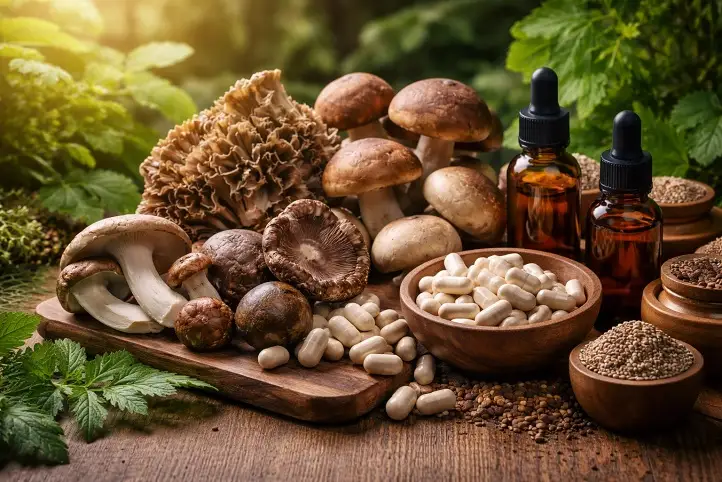
Image Credit: Thailand Wellness News
This unique biological mechanism has led many researchers to believe that ergothioneine plays a far more critical role in human health than previously assumed. In fact, growing scientific evidence suggests that modern diets may be deficient in this compound, raising concerns about long-term wellness and aging outcomes. This Wellness News report highlights that ergothioneine is increasingly being viewed not just as a nutrient, but as a foundational component of preventive health strategies.
The Science Behind Longevity Benefits
Recent studies published in early 2025 have demonstrated that ergothioneine supplementation can significantly extend lifespan in animal models. Worms showed lifespan increases of up to 20 percent, while male mice exhibited notably improved survival rates. While human trials are still evolving, these findings offer compelling insights into how this molecule interacts with the biology of aging.
One of its most remarkable properties is its ability to penetrate mitochondria, the energy-producing structures within cells. By neutralizing harmful reactive oxygen species, ergothioneine helps preserve mitochondrial function, which is essential for maintaining energy levels and slowing cellular decline. Additionally, emerging research indicates that ergothioneine may act as an indirect booster of NAD+, a molecule closely associated with aging and metabolic health.
Scientists are also exploring its impact on cellular senescence, often described as the accumulation of “zombie cells” that no longer function properly but refuse to die. Ergothioneine appears to slow this process while also protecting telomeres, the protective caps on DNA strands that shorten as we age. These combined effects position it as a promising agent in the pursuit of extended healthspan.
Cognitive, Sleep, and Physical Performance Gains
Beyond longevity, ergothioneine is gaining attention for its wide-ranging wellness benefits. Lower blood levels of this compound have been strongly linked to mild cognitive impairment and accelerated mental decline in older adults. Clinical trials suggest that doses of around 25 milligrams daily may enhance memory, learning, and overall cognitive resilience.
Sleep quality is another area where ergothioneine shows promise. Interventional studies conducted in 2025 revealed that consistent intake can improve sleep initiation and deepen sleep cycles. This not only enhances restfulness but also supports memory consolidation and brain recovery.
Physical performance is also positively affected. In laboratory studies involving aged animals, ergothioneine nearly doubled endurance and increased muscle mass. For humans, its protective effects on skeletal muscle may help preserve mobility, balance, and strength, especially in aging populations.
Natural Sources and Supplement Trends
Diet remains the primary source of ergothioneine, with mushrooms leading the list. Varieties such as Shiitake, Oyster mushroom, Porcini, and Maitake are particularly rich in this compound, delivering between 5 to 13 milligrams per serving. However, dietary intake varies significantly across regions, with Western diets often providing only minimal amounts.
This disparity has fueled a surge in ergothioneine supplements, especially among wellness-conscious consumers seeking to optimize longevity. Regulatory bodies in Europe have deemed daily doses of up to 30 milligrams safe, with typical recommendations ranging between 5 and 25 milligrams depending on health goals.
A Nutrient Poised to Redefine Preventive Health
As scientific understanding deepens, ergothioneine is steadily moving from obscurity to mainstream recognition. Its unique ability to target multiple hallmarks of aging, from oxidative stress to cellular decline, makes it a compelling addition to modern wellness strategies. Unlike many fleeting health trends, its benefits are rooted in measurable biological mechanisms, lending credibility to its growing popularity.
What makes ergothioneine particularly noteworthy is its potential to bridge the gap between nutrition and longevity science. By addressing underlying cellular processes rather than just symptoms, it offers a more holistic approach to health maintenance. As more clinical data emerges, it is likely that healthcare professionals will begin to integrate this compound into broader preventive care frameworks.
In a world increasingly focused on extending not just lifespan but quality of life, ergothioneine stands out as a promising ally. Its rise reflects a broader shift toward evidence-based wellness, where nutrients are evaluated not just for immediate benefits but for their long-term impact on human vitality. As awareness grows, this once-overlooked amino acid may well become a cornerstone of future health optimization strategies, shaping how individuals approach aging and overall well-being in the years ahead.
References:
https://link.springer.com/article/10.1007/s11357-024-01111-5
https://www.sciencedirect.com/science/article/pii/S155041312400490X
https://www.sciencedirect.com/science/article/pii/S0531556522002911
https://www.nmn.com/news/anti-aging-supplement-ergothineine-improves-sleep-in-new-study-from-japan
https://www.nature.com/articles/d42473-020-00227-4
https://www.mdpi.com/1661-3821/5/3/15
For the latest wellness trends, keep on logging to Thailand Wellness News
Medical Disclaimer: All content published by Thailand Wellness News is based on scientific research and is intended for informational and educational purposes only. It is not medical advice, diagnosis, or treatment. Readers must not attempt to use, apply, or experiment with any protocols, compounds, or therapies mentioned without first consulting a qualified and licensed medical doctor. Many findings discussed are experimental or preliminary, and only a licensed healthcare professional can determine what is safe and appropriate for an individual’s specific medical condition.