


Wellness News: The global wellness landscape is entering a new era as psychobiotics — a class of probiotics believed to influence mental health through the gut-brain connection — move from niche scientific discussions into mainstream wellness conversations. Once viewed simply as digestive aids, specific strains of beneficial bacteria are now being studied for their potential effects on stress, anxiety, mood balance, and even cognitive performance. Researchers exploring the microbiota-gut-brain axis suggest that microbial communities in the gut communicate with the nervous system through immune pathways, neurotransmitter signaling, and hormonal responses, reshaping how wellness experts think about emotional resilience.
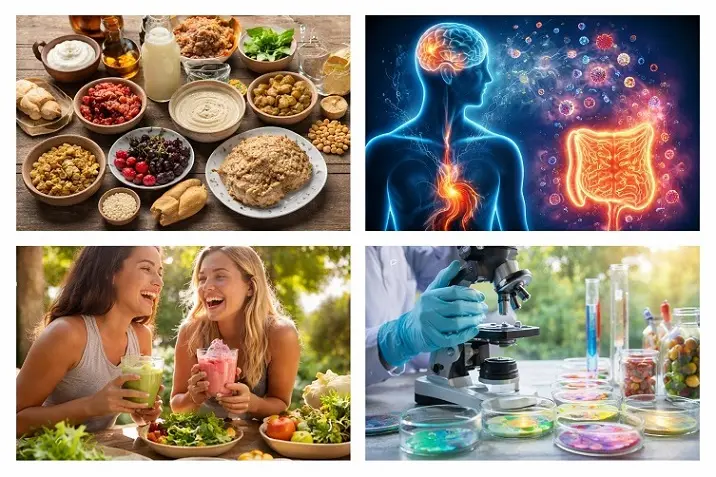
Image Credit: Thailand Wellness News
Across Asia and increasingly within Thailand’s evolving wellness ecosystem, practitioners are exploring how diet, fermented foods, and targeted probiotic strains may support emotional wellbeing alongside physical health. Interest is growing among longevity clinics, nutrition experts, and biohacking communities, and midway through this growing scientific conversation, this Wellness News report highlights how psychobiotics represent the next evolution of microbiome-based wellness — moving beyond digestion and into mood regulation and mental performance.
The Science Behind Psychobiotics and the Gut-Brain Axis
Scientists have known for years that the gut and brain communicate constantly, but newer studies are giving this relationship practical relevance. Research suggests certain bacterial strains may influence cortisol levels, inflammatory markers, and even brain activity patterns linked to stress responses. This has encouraged a shift in wellness thinking, where mental wellbeing is no longer viewed as isolated from metabolic and gut health.
One widely cited study involving Bifidobacterium longum 1714 found that supplementation was associated with reduced perceived stress and subtle improvements in memory and brain activity among healthy volunteers, suggesting a measurable neurological effect beyond digestion. Additional research on the same strain also observed improvements in sleep quality during periods of academic stress, further fueling interest among biohackers and wellness practitioners.
Examples of Psychobiotics and What Studies Have Found
The psychobiotic field is still developing, but several strains repeatedly appear in peer-reviewed clinical trials.
Lactobacillus helveticus R0052 + Bifidobacterium longum R0175 are among the most studied combinations. Human trials have reported reduced psychological distress and improvements in stress-related symptoms in healthy volunteers. More recent randomized trials suggest that while effects may be modest, probiotic interventions can influence brain regions involved in emotional regulation, hinting at real neurobiological impact.
Another notable example is Bifidobacterium longum NCC3001, studied in patients with irritable bowel syndrome. Researchers observed reduced depression scores alongside measurable changes in brain activity, highlighting the possibility that targeting gut health may influence mood disorders, particularly when digestive symptoms coexist.

Image Credit: Thailand Wellness News
Studies involving individuals with depressive symptoms have also shown promising signals. In one clinical investigation, eight weeks of supplementation with psychobiotic strains including B. longum and L. helveticus was associated with improved depression scores and changes in brain-derived neurotrophic factor, a protein linked to brain plasticity.
What Meta-Analyses and Reviews Suggest
While single studies generate excitement, larger reviews provide broader perspective. Recent meta-analyses indicate that probiotics, prebiotics, and synbiotics may produce statistically significant reductions in anxiety and depression symptoms, though researchers caution that effects vary depending on strain, dosage, and participant population. Experts emphasize that psychobiotics should not be considered replacements for medical mental health treatments but may act as supportive lifestyle tools within a wider wellness strategy.
Importantly, researchers also highlight limitations — including small sample sizes and differences between trials — meaning the science is promising but not definitive. This balanced perspective is helping shape responsible wellness narratives rather than exaggerated claims.
Thailand’s Opportunity in Mood-Focused Gut Wellness
Thailand’s rich tradition of fermented foods and plant-forward cuisine may offer a natural foundation for the psychobiotic movement. Ingredients commonly used in traditional diets — fermented vegetables, probiotic beverages, and fiber-rich herbs — align closely with modern microbiome science. As wellness tourism continues to grow, psychobiotic-focused programs combining nutrition, stress management, and gut health assessments could emerge as a strong regional trend.
The blending of traditional dietary wisdom with modern research may also help local wellness brands position themselves at the forefront of science-based lifestyle innovation. With global consumers increasingly seeking natural ways to support mental wellbeing, Thailand’s wellness industry has an opportunity to lead by integrating evidence-driven microbiome strategies into holistic programs.
The Future Direction of Psychobiotics in Wellness
Psychobiotics represent a fascinating turning point where mental health, nutrition, and microbial science intersect. Early studies suggest real potential for certain strains to influence stress perception, sleep quality, and mood, yet researchers continue to stress the importance of long-term trials and personalized approaches. Rather than offering quick fixes, psychobiotics highlight a broader shift in wellness thinking — one that recognizes the body as an interconnected ecosystem where gut health may influence emotional balance just as much as diet and lifestyle choices. As scientific exploration expands and consumers become more informed, psychobiotics may evolve from a wellness trend into a foundational pillar of preventive mental wellbeing strategies that bridge nutrition, neuroscience, and daily living.
References:
https://www.nature.com/articles/tp2016191
https://www.jnmjournal.org/journal/view.html?doi=10.5056/jnm20079
https://www.mdpi.com/2072-6643/15/7/1706
https://www.mdpi.com/2072-6643/15/6/1521
https://www.mdpi.com/2072-6643/15/14/3122
https://journals.sagepub.com/doi/10.1177/0004867416686694
https://www.mdpi.com/2072-6643/12/12/3896
https://www.sciencedirect.com/science/article/pii/S2666354620301393
https://www.tandfonline.com/doi/abs/10.4161/gmic.2.4.16108
https://www.mdpi.com/2072-6643/14/7/1329
https://www.sciencedirect.com/science/article/pii/S2590097824000211
https://www.sciencedirect.com/science/article/pii/S1550830723000587
https://www.jstage.jst.go.jp/article/ras/9/0/9_74/_html/-char/ja
For the latest new trends in the wellness communities and arena, keep on logging to Thailand Wellness News.
Visit Also:
https://www.thailandmedical.news/
Coming Soon:
We own and operate a fast-growing network of more than 800 niche news websites, with plans to scale to 60,000 AI-optimized properties by the end of 2027, creating one of the world’s largest independent digital publishing ecosystems. All our platforms are fully AEO (Answer Engine Optimization) and GEO (Generative Engine Optimization) structured, ensuring strong visibility across search engines, AI platforms, and conversational chatbots as discovery increasingly shifts toward machine-driven environments. Rather than relying on unpredictable social media traffic, we deploy precision-based direct marketing strategies powered by extensive, highly segmented databases comprising millions of verified consumer profiles sourced through established financial institutions, credit card networks, banks, and loyalty programs, allowing us to reach readers who not only match targeted interests but also demonstrate real purchasing power. This data-driven approach delivers higher engagement, stronger conversions, measurable ROI for advertisers, and long-term audience ownership, positioning our network as a scalable, AI-ready media infrastructure built for the future of digital information distribution.
Medical Disclaimer: All content published by Thailand Wellness News is based on scientific research and is intended for informational and educational purposes only. It is not medical advice, diagnosis, or treatment. Readers must not attempt to use, apply, or experiment with any protocols, compounds, or therapies mentioned without first consulting a qualified and licensed medical doctor. Many findings discussed are experimental or preliminary, and only a licensed healthcare professional can determine what is safe and appropriate for an individual’s specific medical condition.