


Wellness News: The global wellness industry, now valued at an estimated US$6.8 trillion, is standing at the edge of one of its most disruptive and defining transitions in decades. A newly released report from the Global Wellness Summit has outlined ten powerful trends that are expected to shape how individuals, businesses, governments, and communities approach wellbeing in 2026. More than a simple trend forecast, the document reflects a deeper reckoning within wellness itself, one that grapples with technology fatigue, gender imbalance, climate anxiety, and the longing for more human, emotionally resonant experiences.
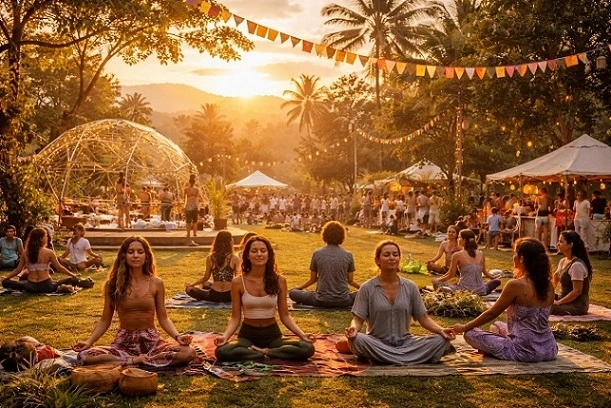
Image Credit: Thailand Wellness News
Unveiled on 27 January during a day-long media event in New York, the 150-page Future of Wellness Trends 2026 report was presented live by Beth McGroarty, vice president of research and forecasting for the Global Wellness Summit and Global Wellness Institute, alongside Jane Kitchen, media and trends analyst for the Summit and editor of the Spa Business Handbook. The launch event brought together journalists, analysts, and industry experts, each contributing insights and case studies that animate the trends and illustrate how rapidly the wellness landscape is evolving. This Wellness News report underscored how these trends are no longer speculative concepts but already reshaping consumer behavior and business models worldwide.
A Wellness Industry in Flux
In her opening remarks, McGroarty emphasized that the past two years have seen more upheaval in the wellness market than the previous two decades combined. These changes, she noted, are often contradictory. On one side are longevity enthusiasts embracing extreme optimization, relentless data tracking, and biotech interventions in pursuit of extended life. On the other are wellness seekers rejecting constant measurement in favor of low-tech, deeply human experiences centered on emotion, connection, and meaning.
This polarity, rather than being a weakness, defines the current moment in wellness. According to the report’s authors, 2026 will be a year when these tensions become more visible and more creatively resolved. The trends forecast reflects an industry attempting to reconcile innovation with humanity, precision with pleasure, and performance with presence.
The Revenge of the Human
One of the most striking themes running through the 2026 trends is what the authors describe as “the revenge of the human.” After years of rapid expansion in wearables, biometrics, and health data platforms, consumers are increasingly questioning whether more data truly equates to better wellbeing. The report predicts a backlash against hyper-quantified wellness, with experiences pivoting toward meaning over measurement and catharsis over clinical metrics.
This shift is expected to manifest in offerings that prioritize sensation, emotional repair, and embodied care rather than optimization. In-person, collective experiences are becoming central to this movement, as people seek shared release and communal healing. The Global Wellness Institute has termed this phenomenon the “festivalization of wellness,” a trend that favors immersive, participatory gatherings over solitary self-tracking.
Women Take Center Stage in Longevity
Another defining theme of the 2026 outlook is the long-overdue correction of gender imbalances in wellness, particularly within the lucrative longevity sector. Historically dominated by male-focused research, products, and imagery, the longevity market is now pivoting toward women’s healthspan in a more serious and science-driven way.
The report highlights that women age differently from men, with ovarian decline during menopause dramatically accelerating systemic ageing. Women are also more likely to suffer longer-lasting immune disorders, osteoporosis, and dementia. Despite these realities, women’s longevity has often been treated as niche or secondary. The authors argue that this is about to change, driven by mounting scientific evidence and growing consumer demand.
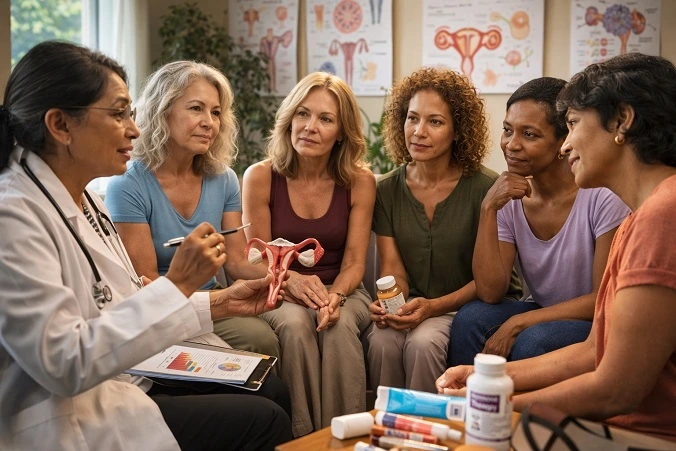
Image Credit: Thailand Wellness News
Emerging innovations include ovarian ageing tests using biomarkers, new approaches to hormone replacement therapy, and biotech research aimed at preserving ovarian reserves. The report suggests that slowing or stopping ovarian decline could become one of the next major breakthroughs in longevity science, with ripple effects across healthcare, wellness, and pharmaceutical markets.
Pushing Back Against Over-Optimization
The second major trend identified for 2026 is an over-optimization backlash. While data-driven wellness has empowered many people to take control of their health, it has also led to fixation, anxiety, and burnout for others. Constant monitoring of sleep, heart rate variability, glucose levels, and activity can create pressure rather than motivation.
In response, the report forecasts a rise in wellness experiences designed to create nervous-system safety and emotional ease. Social saunas, somatic release classes, scream circles, and wellness brands adopting psychological care messaging are gaining traction. These offerings emphasize feeling over function, connection over comparison, and pleasure over productivity, signaling a cultural recalibration of what it means to be well.
Neurowellness Moves into the Mainstream
Neurowellness, defined as practices and technologies aimed at regulating the nervous system, is emerging as a central pillar of future health. Wearables that once focused on sleep and activity have revealed widespread nervous-system overload, prompting demand for solutions that go beyond surface-level relaxation.
The report points to the growth of “hard care” consumer devices such as vagus nerve stimulators, alongside a re-framing of traditional “soft care” practices like massage, breathwork, and yoga as legitimate nervous-system medicine. Advances in brain-body research are strengthening the scientific credibility of these interventions, making them more accessible and, in some cases, prescribable within healthcare and hospitality settings.
Fragrance Becomes a Language of Identity
Fragrance is re-emerging as a powerful cultural and emotional medium within wellness. Rather than a single signature scent, consumers are now curating fragrance wardrobes, layering scents to reflect different moods, identities, and moments. According to the report, this trend represents a desire for creative freedom and self-expression in an increasingly standardized world.
Technology is amplifying this movement. Hospitality and leisure providers are experimenting with AI-driven scent systems that adapt aromas in real time based on activities, contexts, or emotional cues within a space. Fragrance layering is becoming both a personal ritual and a shared sensory experience, blurring the line between wellness, art, and technology.
Disaster Readiness as Preventative Wellness
One of the more sobering trends highlighted in the report is the rise of disaster readiness as a core component of wellbeing. As climate-related crises and global instability become more frequent, preparedness is being redefined as a form of preventative wellness rather than a fringe concern.
The concept of “ready is the new well” reflects a holistic approach that combines physical fitness, mental resilience, and community interdependence. Gyms and fitness studios are being reimagined as potential emergency shelters, while demand is rising for disaster-proof architecture and infrastructure. The report suggests that wellness in 2026 will increasingly address survival, adaptability, and collective resilience.
Skin Longevity Redefines Beauty
In the beauty and personal care sector, the language of “anti-ageing” is giving way to the concept of skin longevity. Instead of attempting to reverse time, brands are focusing on optimizing skin health and function over the long term. This shift aligns with broader wellness values that emphasize prevention, personalization, and regeneration.
Biotech-driven active ingredients, regenerative treatments, and holistic skincare protocols are creating a new era of proactive care. The report notes that this approach is extending beyond skin to include hair longevity, signaling a more integrated understanding of beauty as a reflection of systemic health.
The Festivalization of Wellness
Economic stress, social fragmentation, and digital overload are driving a resurgence of collective wellness experiences that feel more like cultural events than clinical interventions. Wellness raves, sober morning dance parties, and multi-day immersive gatherings are becoming popular alternatives to traditional fitness or spa offerings.
These events prioritize participation over performance and are designed as judgment-free spaces that foster belonging and joy. By blending music, sauna culture, creative expression, and movement, they offer an antidote to isolation and a reminder that wellbeing can be playful, social, and deeply human.
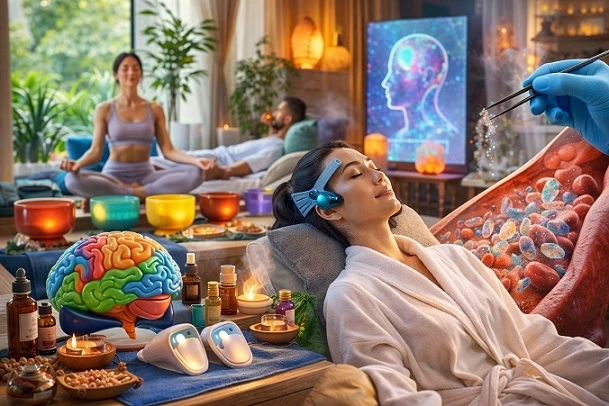
Image Credit: Thailand Wellness News
Women’s Sports and Strength Culture
The report also highlights a continuing revolution in women’s sports and fitness culture. As the women’s sports economy expands, female athletes are moving from the margins to the mainstream, attracting larger audiences and greater cultural recognition. Partnerships with media, fashion, and wellness brands are accelerating this visibility.
Importantly, the authors note a shift in body ideals, with more women embracing strength over thinness. This change is framed not only as a physical evolution but also as a political statement, reflecting broader conversations about agency, representation, and power in wellness and society.
Microplastics Become a Human Health Priority
Microplastics have crossed a critical threshold from environmental concern to direct human health issue. The report predicts that 2026 will mark a turning point, with wellness and medical sectors moving from observation to intervention. Microplastics are now linked to inflammation, hormonal disruption, cardiovascular disease, and potential cognitive effects.
Private clinics are already offering costly treatments aimed at reducing microplastic loads in the body, and the authors suggest that measuring these substances in bloodstreams may become routine. At the same time, efforts to reduce exposure at the source are expected to expand, as consumers demand safer products and environments.
Longevity Residences Redefine Home Life
The final trend centers on longevity-focused real estate. New residential developments are integrating circadian lighting, diagnostics, concierge medicine, and personalized health tracking into daily living environments. These longevity residences represent a new category within wellness real estate, going beyond amenities to support healthspan gains over decades.
Driven by an ageing population and increased investment in longevity technology, the home is becoming a central site for proactive health behaviors. Architecture and design are being leveraged as tools for wellbeing, reducing friction and making healthy choices the default.
Where Wellness Is Headed Next
Taken together, the Global Wellness Summit’s 2026 trends paint a picture of an industry in the midst of a profound recalibration. Wellness is expanding beyond individual optimization to address emotional repair, social connection, gender equity, environmental resilience, and long-term health. The emphasis is shifting from doing more to feeling better, from tracking life to actually living it.
As these trends unfold, businesses, policymakers, and consumers will be challenged to rethink what wellness truly means in an increasingly complex world. The future outlined in this report suggests that the most successful wellness innovations will be those that restore humanity to the center of health, balancing science and soul in equal measure.
For the latest Wellness Trends, keep on logging to Thailand Wellness News.