


Wellness Supplements: A Tea-Derived Amino Acid Captures Global Wellness Attention
Across Asia and increasingly around the world, interest is growing in a gentle but powerful compound that promises calm focus without sedation. L-Theanine, a naturally occurring amino acid most famously found in green tea, has moved from traditional tea culture into the modern wellness spotlight. Once known only to Japanese researchers and tea connoisseurs, it is now widely discussed among neuroscientists, nutritionists, wellness practitioners, and consumers searching for cognitive clarity in an overstimulated world.

Image Credit: Thailand Wellness News
As modern life becomes faster, louder, and more mentally demanding, the desire for solutions that support concentration while reducing stress has never been greater. L-Theanine appears to occupy a rare middle ground. It promotes relaxation without drowsiness, alertness without agitation, and mental clarity without the crash associated with stimulants. This unique profile has positioned it as one of the most intriguing natural compounds in contemporary wellness science.
Understanding L-Theanine and Its Natural Origins
L-Theanine is the most biologically active form of theanine, an amino acid that is not used by the body to build proteins but instead exerts direct effects on the brain and nervous system. It was first isolated by Japanese scientists in the late 1940s from gyokuro green tea leaves, a shaded tea variety known for its smooth flavor and calming properties.
Green tea remains the richest natural source of L Theanine, though it is also present in black tea, white tea, oolong tea, and certain species of mushrooms. Its presence is partly responsible for tea’s distinctive umami taste and its long-associated sense of calm alertness. Traditional tea preparation methods, especially shading tea leaves before harvest, increase L-Theanine concentration, which explains why matcha and gyokuro teas are particularly prized.
In modern wellness circles, L-Theanine is now also available in supplemental form, offering standardized doses that are significantly higher than what is typically obtained from tea alone.
How L-Theanine Works Inside the Brain
What sets L-Theanine apart from many other amino acids is its ability to cross the blood brain barrier. Once inside the brain, it influences several key neurochemical pathways that regulate mood, attention, stress response, and sleep.
One of its most important actions is the stimulation of alpha brain waves. These brain waves are associated with a state often described as relaxed alertness, the same mental state seen during meditation, creative flow, and moments of effortless focus. Alpha waves allow the brain to remain attentive while filtering out distractions, creating a sense of mental spaciousness rather than mental strain.
L-Theanine has attracted increasing scientific attention as a tea-derived amino acid known for supporting calm alertness, stress balance, and cognitive performance without sedation. By enhancing alpha brain wave activity and regulating neurotransmitters such as GABA, dopamine, and serotonin, it allows the brain to remain focused while relaxed, even under pressure. This Wellness Supplements news report highlights L-Theanine’s unique capacity to enhance calm focus without impairing reaction time or cognitive speed, distinguishing it from stimulant-driven or sedative compounds that often interfere with mental clarity.
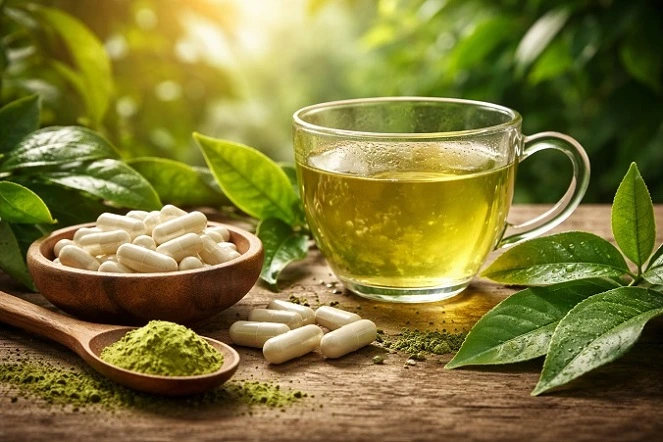
Image Credit: Thailand Wellness News
Beyond alpha wave stimulation, L-Theanine modulates key neurotransmitters. It increases levels of GABA, the brain’s primary inhibitory neurotransmitter, which helps quiet excessive neural firing and reduces feelings of anxiety and restlessness. At the same time, it supports healthy levels of dopamine and serotonin, neurotransmitters associated with motivation, mood stability, emotional balance, and cognitive flexibility.
This combination explains why L-Theanine can help individuals feel calm yet engaged, relaxed yet mentally sharp.
L-Theanine and Stress Regulation
Chronic stress has become one of the defining health challenges of the modern era, contributing to sleep disorders, cognitive decline, emotional instability, and weakened immunity. L-Theanine’s effects on stress appear to operate on both psychological and physiological levels.
Studies have shown that supplementation with L-Theanine can reduce heart rate and lower cortisol levels during stressful tasks. Cortisol, often referred to as the stress hormone, plays a critical role in the body’s fight or flight response, but prolonged elevation is associated with impaired memory, anxiety, and hippocampal dysfunction.
By moderating the hypothalamic pituitary adrenal axis, L-Theanine helps prevent exaggerated stress responses while allowing the body to remain responsive and alert. This makes it particularly appealing for individuals facing high pressure environments such as students, professionals, healthcare workers, and caregivers.
Cognitive Performance and Mental Clarity
L-Theanine is widely classified as a nootropic, a substance that enhances cognitive function in healthy individuals. Research suggests that it improves attention, working memory, reaction time, and accuracy, especially under conditions of mental stress.
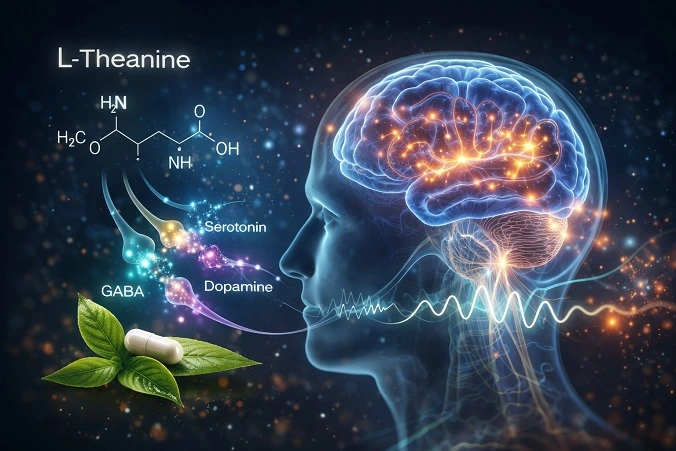
Image Credit: Thailand Wellness News
Unlike stimulants that push the brain into overdrive, L-Theanine works by optimizing neural efficiency. By reducing background mental noise and enhancing alpha wave activity, it allows the brain to focus more effectively on relevant tasks. This has led to its popularity among individuals seeking sustained productivity without jitteriness or burnout.
Some studies indicate that L-Theanine may also support hippocampal health, the brain region responsible for memory formation and recall. This raises interest in its potential role in age related cognitive decline and memory preservation.
Mood Balance and Emotional Wellbeing
Mood regulation is another area where L-Theanine demonstrates promise. By supporting serotonin and dopamine synthesis, it contributes to emotional stability, motivation, and resilience. Preliminary clinical trials have shown reductions in symptoms of anxiety, mild depression, sleep disturbances, and cognitive impairment in individuals using daily L-Theanine supplementation.
Unlike pharmaceutical anxiolytics, L-Theanine does not appear to induce dependence or sedation. In comparative studies, it has demonstrated calming effects comparable to certain prescription medications, without impairing alertness or psychomotor performance.
This gentle profile makes it appealing for individuals who experience occasional anxiety, emotional tension, or mental fatigue but wish to avoid stronger interventions.
L-Theanine and Sleep Quality
Sleep is deeply connected to mental health and cognitive performance, and L-Theanine’s influence extends into sleep regulation. By enhancing GABA activity and acting as a precursor to serotonin, which in turn supports melatonin production, L-Theanine helps regulate the sleep wake cycle.
Research has shown improvements in sleep onset, sleep efficiency, and overall sleep quality, particularly in individuals experiencing stress related sleep disturbances. Importantly, L-Theanine improves sleep without acting as a sedative, meaning it does not cause grogginess or impair next day alertness.
It has also been shown to counteract caffeine induced disruptions in non-REM sleep, making it a popular companion for those who consume caffeine but wish to protect sleep quality.
Image Credit: Thailand Wellness News
Neuroprotection And Brain Longevity
Beyond immediate cognitive and emotional benefits, L-Theanine exhibits several neuroprotective properties. It increases levels of glutathione, one of the brain’s most powerful antioxidants, helping protect neurons from oxidative stress and environmental toxins.
Research suggests it may also elevate brain derived neurotrophic factor, a protein essential for neuron survival, growth, and plasticity. Higher BDNF levels are associated with improved learning, memory, and resistance to neurodegenerative processes.
Animal and early human studies indicate potential protective effects against amyloid plaque accumulation, heavy metal toxicity, and inflammatory signaling pathways associated with Alzheimer’s and other neurodegenerative diseases. While more research is needed, these findings position L-Theanine as a promising compound for long term brain health.
The Synergy Between L Theanine and Caffeine
One of the most well-known aspects of L Theanine is its synergistic relationship with caffeine. When consumed together, particularly in a ratio of approximately two parts L-Theanine to one part caffeine, users often report enhanced alertness, improved attention, and reduced jitteriness.
Scientific studies support these experiences, showing improvements in accuracy, reaction time, and working memory compared to caffeine alone. Importantly, L-Theanine appears to offset caffeine induced reductions in cerebral blood flow, contributing to smoother, more sustained energy.
This synergy explains why tea produces a calmer, more focused stimulation compared to coffee, and why L-Theanine is often added to modern cognitive supplements.
Image Credit: Thailand Wellness News
Dietary Sources Versus Supplementation
While tea remains a valuable dietary source of L-Theanine, the amount per cup typically ranges between five and forty milligrams depending on type and preparation. Clinical studies, however, often use doses between one hundred and four hundred milligrams to achieve measurable effects.
Additionally, the presence of D-theanine in tea may compete with L-Theanine for absorption, potentially reducing bioavailability. For this reason, supplementation offers a more reliable and concentrated method for those seeking therapeutic benefits.
L-Theanine supplements are generally considered safe for daily use, with few reported side effects. As with any supplement, individuals are advised to consult healthcare professionals before introducing it into their routine, particularly if they are pregnant, nursing, or taking medication.
A Growing Role in Modern Wellness
From traditional tea ceremonies to cutting edge neuroscience, L-Theanine represents a rare bridge between ancient wisdom and modern research. Its ability to calm the mind while sharpening focus aligns perfectly with the needs of contemporary life, where mental overload is common and true relaxation is increasingly elusive.
As interest in non-sedating, brain friendly wellness solutions continues to grow, L-Theanine is likely to remain at the forefront of nutraceutical innovation.
Final Thoughts on A Calm Focus Revolution
L-Theanine stands out as a uniquely balanced compound that supports relaxation, focus, mood stability, stress resilience, sleep quality, and long-term brain health without compromising alertness. Its gentle yet wide ranging effects make it suitable for daily use across diverse age groups and lifestyles. As research continues to expand, L-Theanine is poised to become a cornerstone of cognitive wellness strategies worldwide, offering a natural pathway to calm clarity in an increasingly demanding world.
References:
Lu K, Gray MA, Oliver C, Liley DT, Harrison BJ, Bartholomeusz CF, et al. The acute effects ofL-theanine in comparison with alprazolam on anticipatory anxiety in humans. Hum Psychopharmacol Clin Exp [Internet]. John Wiley & Sons; 2004 Oct 1;19(7):457–65. Available from: http://doi.wiley.com/10.1002/hup.611
Song CH, Jung JH, Oh JS, Kim KS. Effects of Theanine on the Release of Brain Alpha Waves. Korean J Nutr [Internet]. Tong Hakhoe; 1968 Nov 1:918–23. Available from: https://koreamed.org/SearchBasic.php?RID=0124KJN/2003.36.9.918&DT=1
Casimir J, Jadot J, Renard M. Séparation et caractérisation de la N-éthyl-γ-glutamine à partir de Xerocomus badius. Biochim Biophys Acta [Internet]. Elsevier; 1960 Apr 22;39(3):462–8. Available from: https://www.sciencedirect.com/science/article/pii/0006300260901992
Finger A, Kuhr S, Engelhardt UH. Chromatography of tea constituents. J Chromatogr A [Internet]. Elsevier; 1992 Oct 30;624(1–2):293–315. Available from: https://www.sciencedirect.com/science/article/pii/002196739285685M
Lyon MR, Kapoor MP, Juneja LR. The effects of L-theanine (Suntheanine®) on objective sleep quality in boys with attention deficit hyperactivity disorder (ADHD): a randomized, double-blind, placebo-controlled clinical trial. Altern Med Rev [Internet]. 2011 Dec;16(4):348–54. Available from: http://www.ncbi.nlm.nih.gov/pubmed/22214254
Jang H-S, Jung JY, Jang I-S, Jang K-H, Kim S-H, Ha J-H, et al. L-theanine partially counteracts caffeine-induced sleep disturbances in rats. Pharmacol Biochem Behav [Internet]. 2012 Apr;101(2):217–21. Available from: http://www.ncbi.nlm.nih.gov/pubmed/22285321
Sakato Y. The chemical constituents of tea: III. A new amide theanine. Nippon Nogeikagaku Kaishi [Internet]. 1949;23:262–7. Available from: http://www.suntheanine.com/wp-content/uploads/2013/06/2007.01.rao_.suntheanine.nutracos.pdf
Wang, L., Brennan, M., Li, S., Zhao, H., Lange, K., & Brennan, C. (2022). How does the tea L-theanine buffer stress and anxiety. Food Science and Human Wellness, 11(3), 467–475. https://doi.org/10.1016/j.fshw.2021.12.004
Kurihara S, Shibakusa T, Tanaka KA. Cystine and theanine: amino acids as oral immunomodulative nutrients. Springerplus [Internet]. Nature Publishing Group; 2013 Nov 26;2(1):635. Available from: http://springerplus.springeropen.com/articles/10.1186/2193-1801-2-635
Tian X, Sun L, Gou L, Ling X, Feng Y, Wang L, et al. Protective effect of l-theanine on chronic restraint stress-induced cognitive impairments in mice. Brain Res [Internet]. Elsevier; 2013 Mar 29;1503:24–32. Available from: https://www.sciencedirect.com/science/article/pii/S0006899313001856
Cho H-S, Kim S, Lee S-Y, Park JA, Kim S-J, Chun HS. Protective effect of the green tea component, l-theanine on environmental toxins-induced neuronal cell death. Neurotoxicology [Internet]. 2008 Jul, 29(4):656–62. Available from: http://www.ncbi.nlm.nih.gov/pubmed/18452993
Dodd, F. L., Kennedy, D. O., Riby, L. M., & Haskell-Ramsay, C. F. (2015). A double-blind, placebo-controlled study evaluating the effects of caffeine and L-theanine both alone and in combination on cerebral blood flow, cognition and mood. Psychopharmacology, 232(14), 2563–2576. https://doi.org/10.1007/s00213-015-3895-0
Ashihara H. Occurrence, Biosynthesis and Metabolism of Theanine (γ-Glutamyl-L-ethylamide) in Plants: A Comprehensive Review. Natural Product Communications [Internet]. 2015 May;10(5):1934578X1501000. Available from: https://doi.org/10.1177%2F1934578X1501000525
Hase, A., Jung, S. E., & aan het Rot, M. (2015). Behavioral and cognitive effects of tyrosine intake in healthy human adults. Pharmacology, biochemistry, and behavior, 133, 1–6. https://doi.org/10.1016/j.pbb.2015.03.008
Kühn, S., Düzel, S., Colzato, L., Norman, K., Gallinat, J., Brandmaier, A. M., Lindenberger, U., & Widaman, K. F. (2019). Food for thought: association between dietary tyrosine and cognitive performance in younger and older adults. Psychological research, 83(6), 1097–1106. https://doi.org/10.1007/s00426-017-0957-4
Evans, M., McDonald, A. C., Xiong, L., Crowley, D. C., & Guthrie, N. (2021). A Randomized, Triple-Blind, Placebo-Controlled, Crossover Study to Investigate the Efficacy of a Single Dose of AlphaWave® L-Theanine on Stress in a Healthy Adult Population. Neurology and therapy, 10(2), 1061–1078. https://doi.org/10.1007/s40120-021-00284-x
Hidese, S., Ogawa, S., Ota, M., Ishida, I., Yasukawa, Z., Ozeki, M., & Kunugi, H. (2019). Effects of L-Theanine Administration on Stress-Related Symptoms and Cognitive Functions in Healthy Adults: A Randomized Controlled Trial. Nutrients, 11(10), 2362. https://doi.org/10.3390/nu11102362
Juneja LRCD, Okubo T, Nagato Y, Yokogoshi H. l-Theanine—a unique amino acid of green tea and its relaxation effect in humans. Trends Food Sci Technol. 1999;10:425. doi: 10.1016/S0924-2244(00)00031-5.
For the latest on Wellness Supplements, keep on logging to Thailand Wellness News.
Medical Disclaimer: All content published by Thailand Wellness News is based on scientific research and is intended for informational and educational purposes only. It is not medical advice, diagnosis, or treatment. Readers must not attempt to use, apply, or experiment with any protocols, compounds, or therapies mentioned without first consulting a qualified and licensed medical doctor. Many findings discussed are experimental or preliminary, and only a licensed healthcare professional can determine what is safe and appropriate for an individual’s specific medical condition.