

Wellness Biohacking: A Soothing Soak with Surprising Benefits
Researchers from the Bowerman Sports Science Center at the University of Oregon have discovered that immersing the body in hot water may deliver health benefits similar to exercise. Their study compared the effects of three popular passive heating methods—traditional saunas, far-infrared saunas, and hot tubs—and found that soaking in hot water produced the strongest physiological responses. Participants experienced greater rises in body temperature, improved blood flow, lower blood pressure, and enhanced immune activity after a single session.
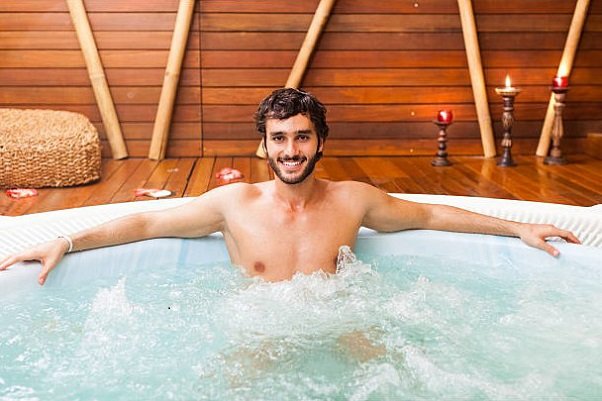
A warm soak in a hot tub may boost heart and immune function almost as effectively as a workout
Image Credit: Minerva Studio/Getty Images
According to this Wellness Biohacking news report, the researchers observed that hot water immersion triggered more significant cardiovascular and immune changes than either dry or infrared saunas. These findings suggest that for individuals unable to engage in regular exercise, hot baths could serve as an effective alternative to maintain heart and vascular health.
How the Study Was Conducted
The study was led by Dr. Christopher Minson, the Kenneth M. and Kenda H. Singer Endowed Professor of Human Physiology, and doctoral student Jessica Atencio at the University of Oregon’s Bowerman Center. Their team recruited twenty healthy men and women aged between twenty and twenty-eight who underwent three separate 45-minute sessions—one in a hot tub heated to 40.5°C, one in a traditional dry sauna set to 80°C, and one in a far-infrared sauna at 45–65°C. Researchers measured participants’ core temperature, blood pressure, heart rate, cardiac output, and immune markers before, during, and after each session.
The results were striking. Hot water immersion increased core body temperature by an average of 1.1°C—nearly triple the rise achieved in the dry sauna and far greater than in the infrared sauna, which showed minimal change. This spike in body temperature boosted blood flow and cardiac output, improving vascular function and lowering blood pressure. Participants’ immune systems also reacted strongly, showing a measurable rise in interleukin-6 (IL-6) and activated immune cells 24 hours after soaking.
Why Hot Water Works Better
Dr. Minson explained that water’s high thermal conductivity—about twenty-four times greater than air—makes it far more efficient at transferring heat to the body. Unlike in a sauna, where sweating helps cool the skin, submersion in hot water prevents heat loss, forcing the body to adapt and strengthening its thermoregulatory systems. This produces cardiovascular and immune responses similar to those seen during moderate exercise. Atencio noted that “just the force of blood moving across your vessels is beneficial for vascular health,” emphasizing that this kind of stress helps keep blood vessels flexible and efficient.
A Promising Alternative to Exercise
While exercise remains the best way to maintain overall fitness, the study suggests that heat therapy—especially hot water immersion—can mimic many of the same benefits for those who cannot exercise regularly due to health, mobility, or age-related limitations. Repeated sessions may further enhance cardiovascular health, lower chronic inflammation, and promote better circulation. However, researchers urge users to practice heat therapy safely, ideally under medical supervision, to avoid overheating or dehydration.
The Growing Appeal of Heat-Based Therapies
Heat bathing traditions have existed for centuries in many cultures, from Finnish saunas to Japanese onsens. Modern science is now confirming what ancient wellness practices have long claimed: that controlled exposure to heat can rejuvenate both body and mind. The University of Oregon team believes further research on older or clinical populations could reveal even more potential for hot water therapy as a low-impact, accessible health tool.
The study findings were published in the peer reviewed journal American Journal of Physiology.
https://journals.physiology.org/doi/full/10.1152/ajpregu.00012.2025
For the latest on Wellness Biohacking strategies, keep on logging to Thailand Wellness News.
Medical Disclaimer: All content published by Thailand Wellness News is based on scientific research and is intended for informational and educational purposes only. It is not medical advice, diagnosis, or treatment. Readers must not attempt to use, apply, or experiment with any protocols, compounds, or therapies mentioned without first consulting a qualified and licensed medical doctor. Many findings discussed are experimental or preliminary, and only a licensed healthcare professional can determine what is safe and appropriate for an individual’s specific medical condition.